Economy & Heating & Immersion
Power plants now start, ramp and cost like the real machines, and every home has a heating system its owner replaces on cost. New colonies are founded on four kinds of map, with roads, farms, herds and 87 new pieces of art.
Plants start, ramp and cost like the real machines
Thermal plants change output at a limited rate and take time to start from cold: minutes for a gas turbine, hours for a coal station, a day and a half for a reactor. Every start costs fuel and service life, so the merit order is run over the next two days to decide which plants are started and which are kept warm.
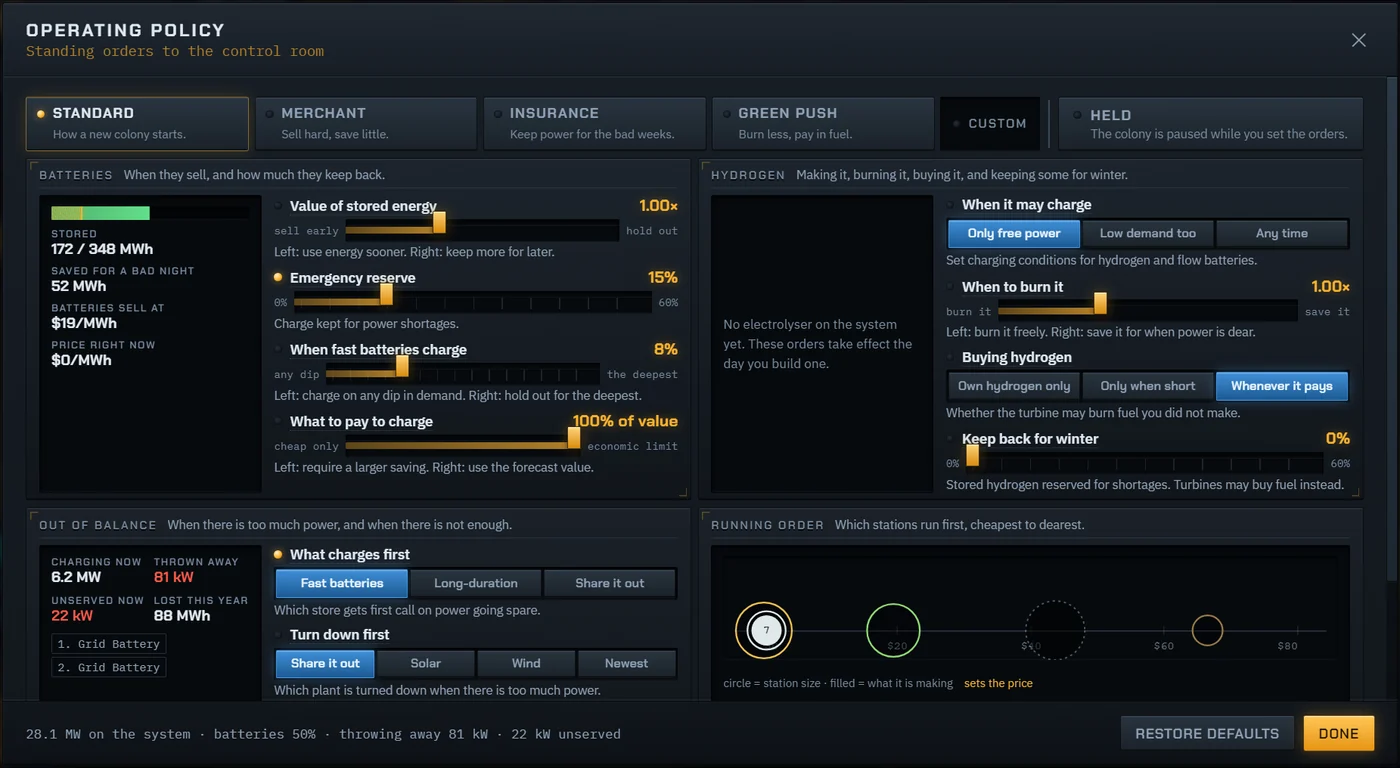
Batteries, dam reservoirs and stored hydrogen are valued on a two week forecast of demand, weather and what the rest of the fleet would cost to run instead, not on the recent average price.
- The fair price is the cost of supply plus $22/MWh, and the regulator reads your tariff in dollars above it.
- Cheap power draws people to a town.
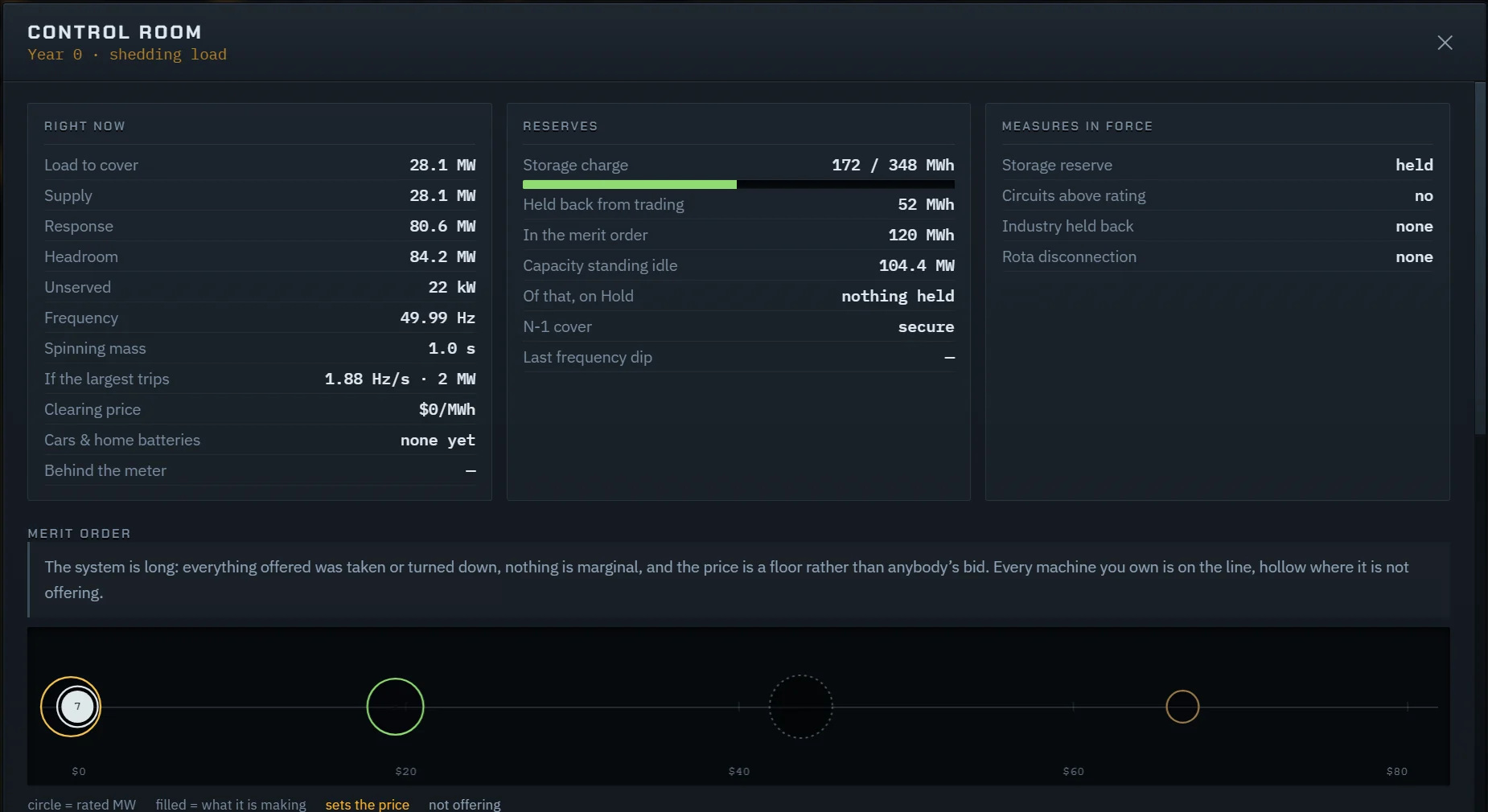
- When the largest running plant trips, the frequency falls at a rate set by the spinning mass. A battery or a second machine behind it keeps customers on.
- The control room shows whether the fleet is N-1 secure.
Every tonne, from the fuel to the air
A new Emissions screen draws everything the colony emits as a flow: from each fuel, through the sector that burned it, to the atmosphere or into capture. Look at right now, a month, a year or the whole run.
- Hover a flow to trace it, or click a block to pin it.
- A table lists every source, its share and whether the carbon price reaches it.
- Industrial processes and farming are sources of their own.
- Heat networks have their own sector, and oil, LPG and wood their own rows.
Every home heats the way it looks
Every town block now has a heating mix: heat pumps, gas, oil, LPG, wood, electric heaters and heat networks. What a block starts with depends on what it is. Houses have room for a heat pump, most flats do not, and a village off the gas main cannot switch to gas.
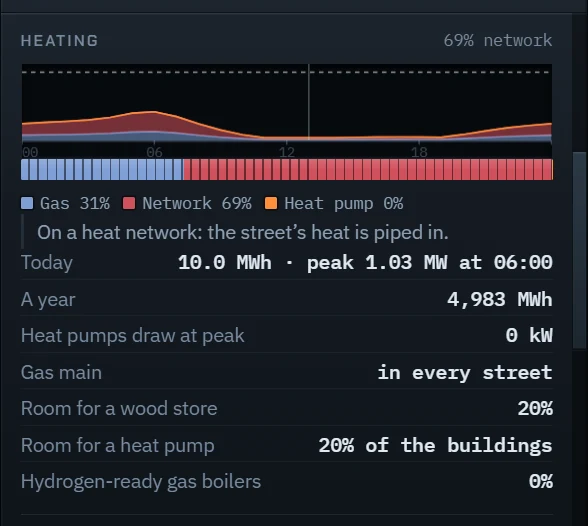
The block card shows the day’s heat hour by hour, and what the block has room for.
- The Heating map layer colours every block by how it heats.
- Heat pumps and electric heaters are load on your grid. Storage heaters charge overnight.
- Everything else is burned in the town and counts against your carbon record.
- The emissions screen gives oil, LPG and wood their own rows.
Owners switch on cost
Nothing is replaced while it works. When a boiler wears out, its owner fits whatever heats the home for least a year, at their own cost of capital. Firms weigh it on a steeper curve than households.
Oil and LPG move to gas where the gas main reaches. A rising carbon price moves gas to heat pumps. Wood holds.
- A district’s heat pump grant pays part of the bill.
- A boiler rule takes oil and LPG, or every fossil boiler, off the table on the day a boiler is replaced.
- Homes a rule moves off their own choice cost opinion for about a year, less where a grant paid part.
- At the start, gas heats a home for less than electric heaters in every scenario but Mandate.

Draw districts and set policy once
Draw named districts over your towns with a pencil on the new Districts map layer. Grants and the smart meter rollout moved there from the local substations, so one decision covers a whole neighbourhood.
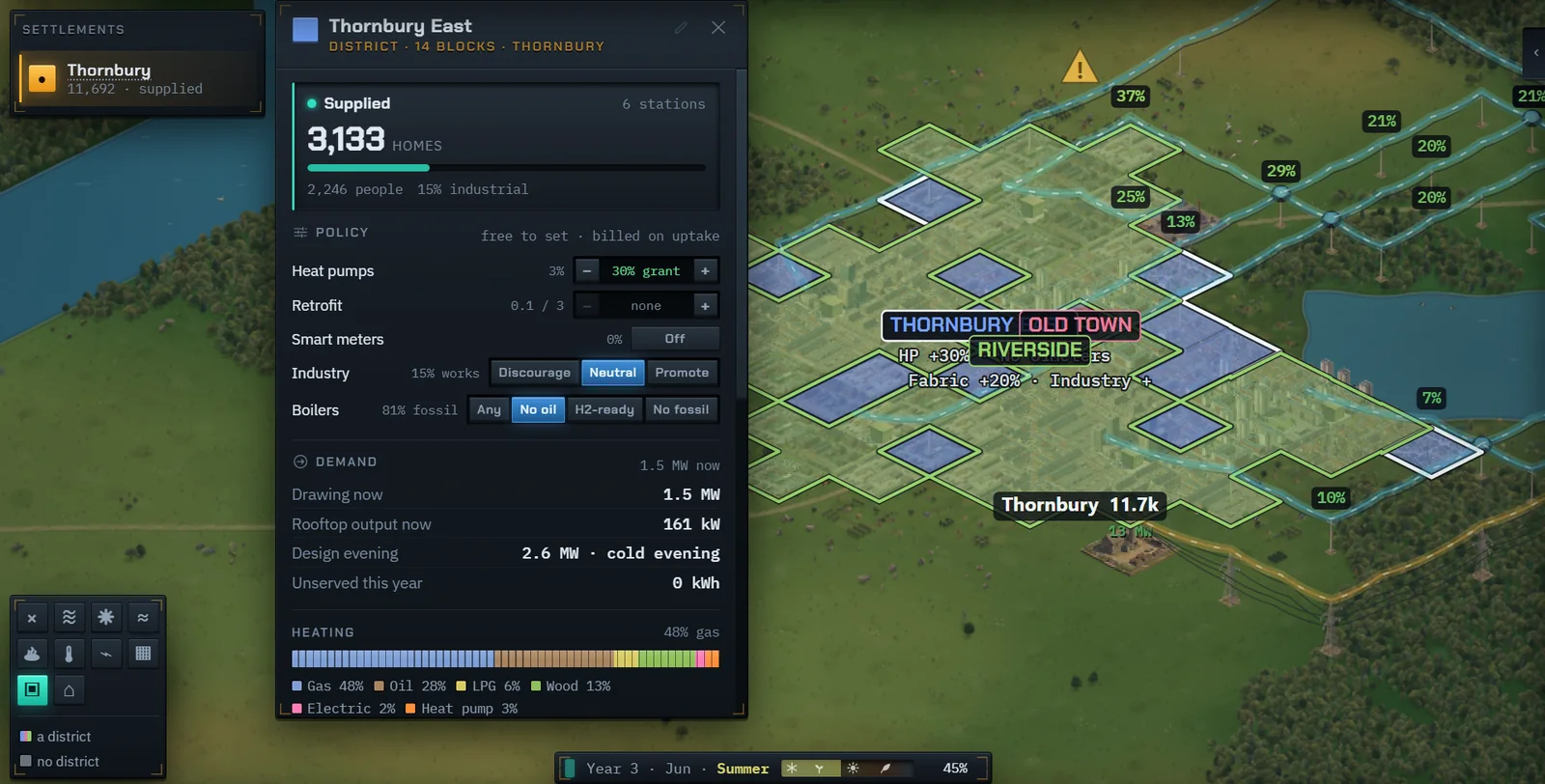
Each district carries a heat pump grant or levy, a retrofit grant, a smart meter rollout, an industry stance and a boiler rule. Its card shows its homes, its demand, how they heat and what the district cost you last month.
- A levy on new heat pumps is paid to you by the households that fit them.
- Promoting industry pays the works a development rate while its ground grows.
- The asset register has a Districts tab.
- In an old save, a substation that offered grants becomes a district of its streets.
Towns build heat networks where they pay
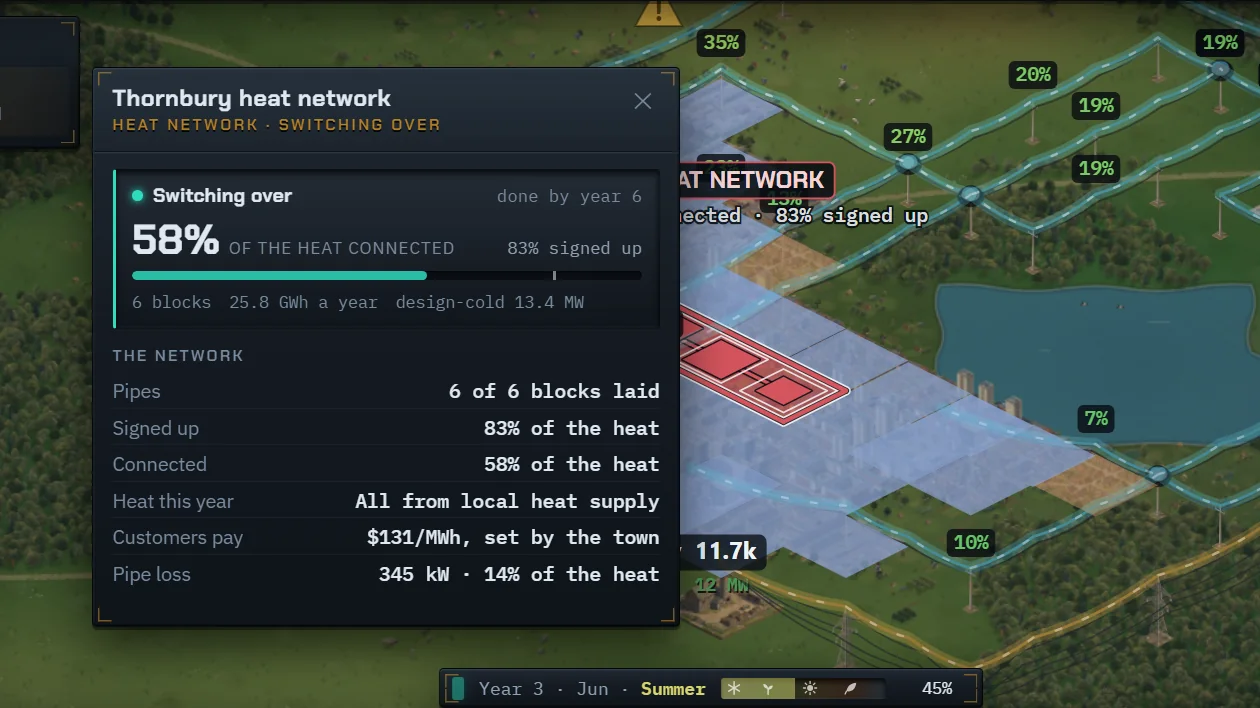
Where heat pumps fit badly, mostly under flats, a town lays a heat network. Each September from the second year it plans one where enough owners sign up and heat pumps would not heat the homes for less. Then the pipes go in one block at a time, and the homes on each block switch over within about three years.
The town sets the heat price at what the heat costs to supply. A heat bill above gas makes households a little slower to buy cars, solar panels and insulation.
- Roadworks move across the map block by block.
- You can pay part of the pipes to get a network laid sooner. The town takes that part off its heat price for good.
- The carbon from a network’s local heat supply is on your carbon bill.
The town’s heat pumps buy your power
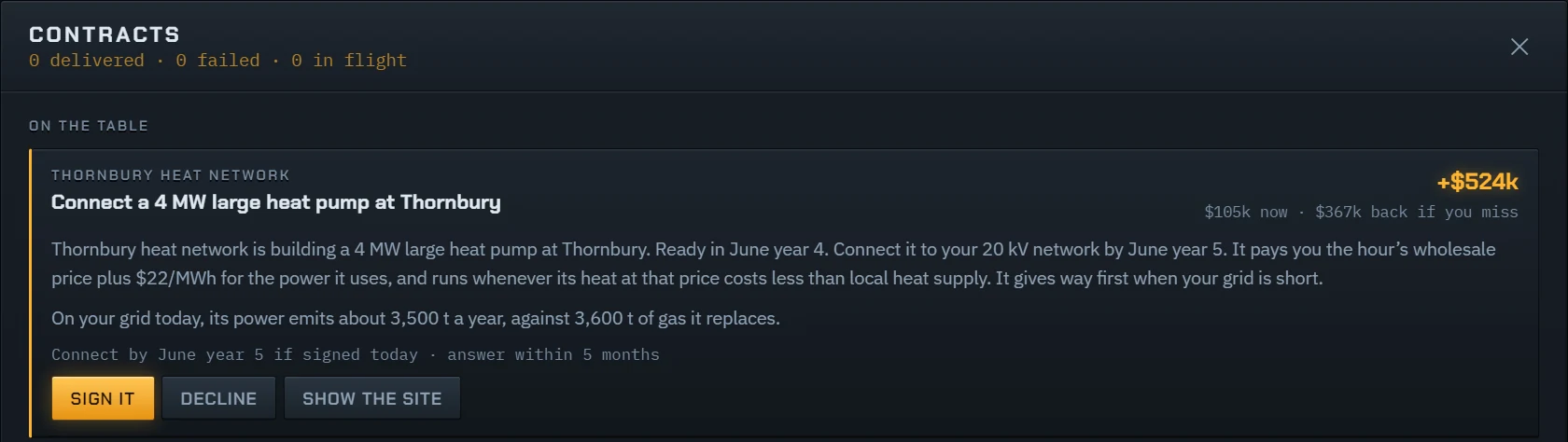
Once a network’s pipes are in, the town’s heat operator orders a large heat pump, then an electric boiler if your grid spills power. The game builds each one, and you connect it to your 20 kV network by the date on the contract.
The town pays the hour’s wholesale price plus $22/MWh for a heat pump’s power, and runs it whenever its heat at that price costs less than local heat supply. An electric boiler runs only on power your grid would otherwise spill, and pays nothing for it.
- Town heat plant gives way first when your grid is short, before any home or firm.
- The town builds its own heat store beside a running heat pump.
- Finance shows the power you sell to heat networks and what their carbon costs you.
New designs
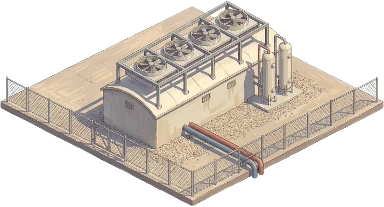
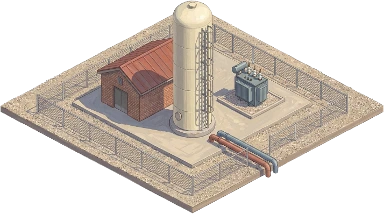
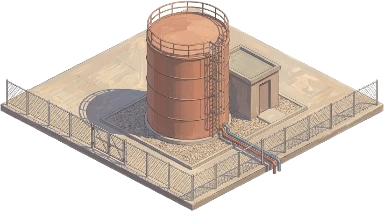
The towns’ heat plant has three new buildings: a large heat pump, an electric boiler and a heat store.
The country has 84 new pieces: trees, shrubs, reeds and rocks, herds, deer and waterfowl, boats on the water, and the cottages and farm buildings at the edge of every town.













Four kinds of country
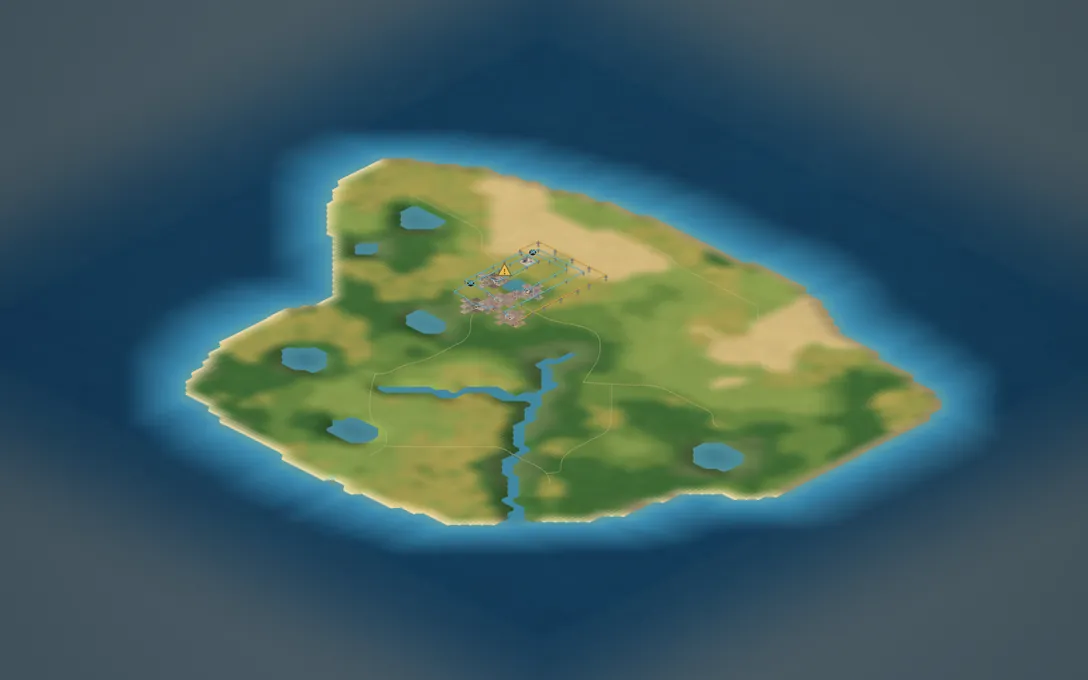
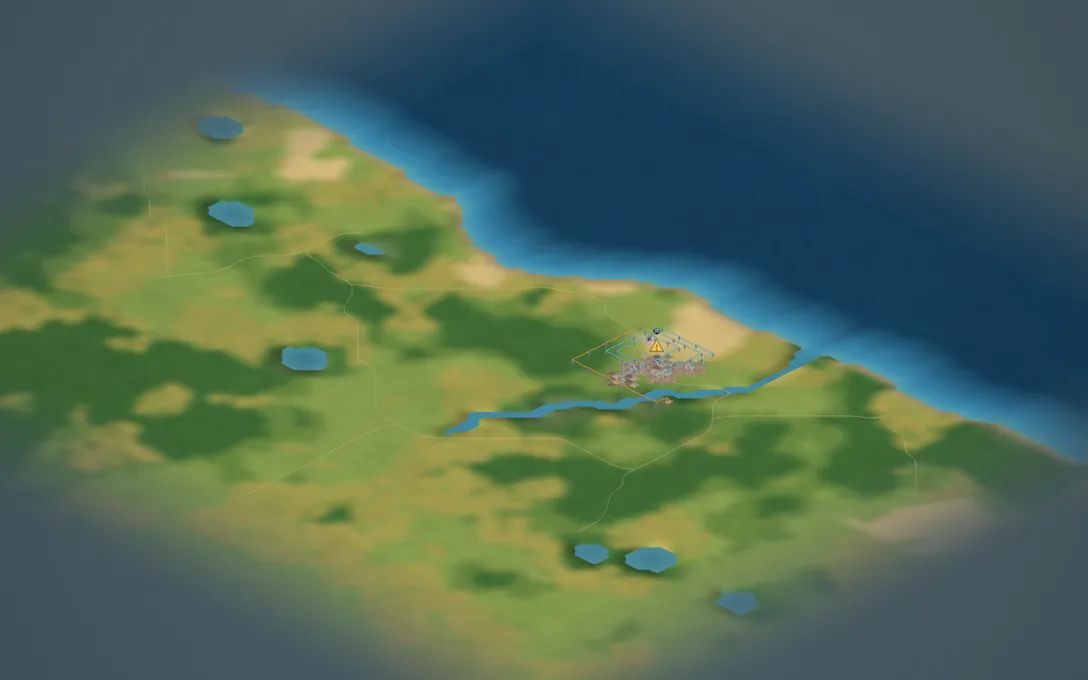
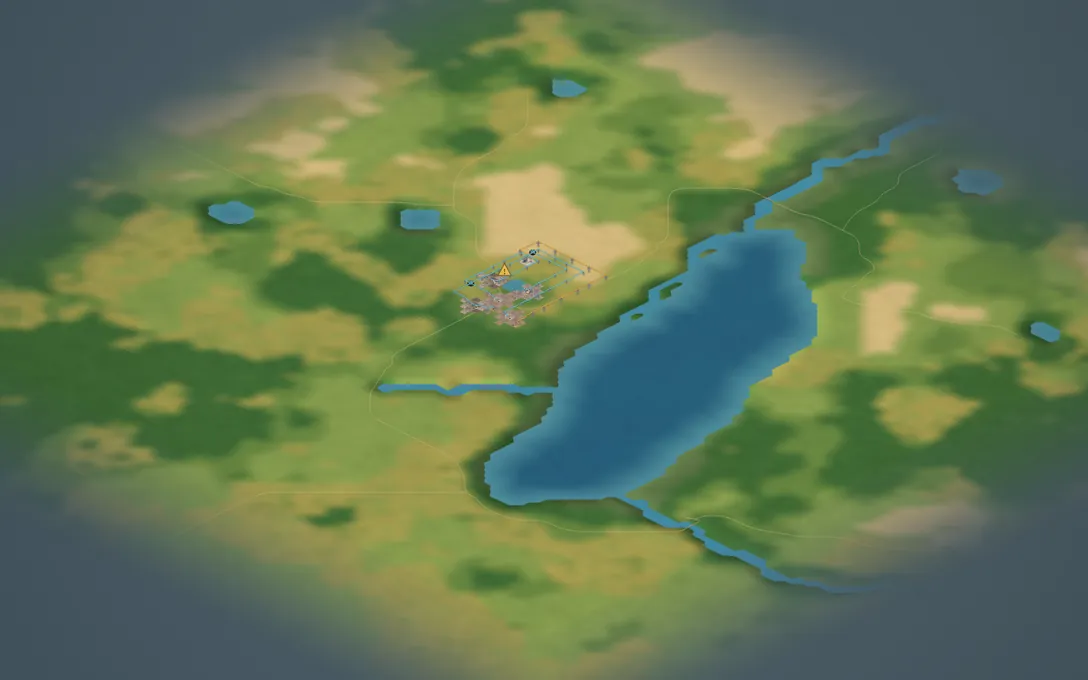
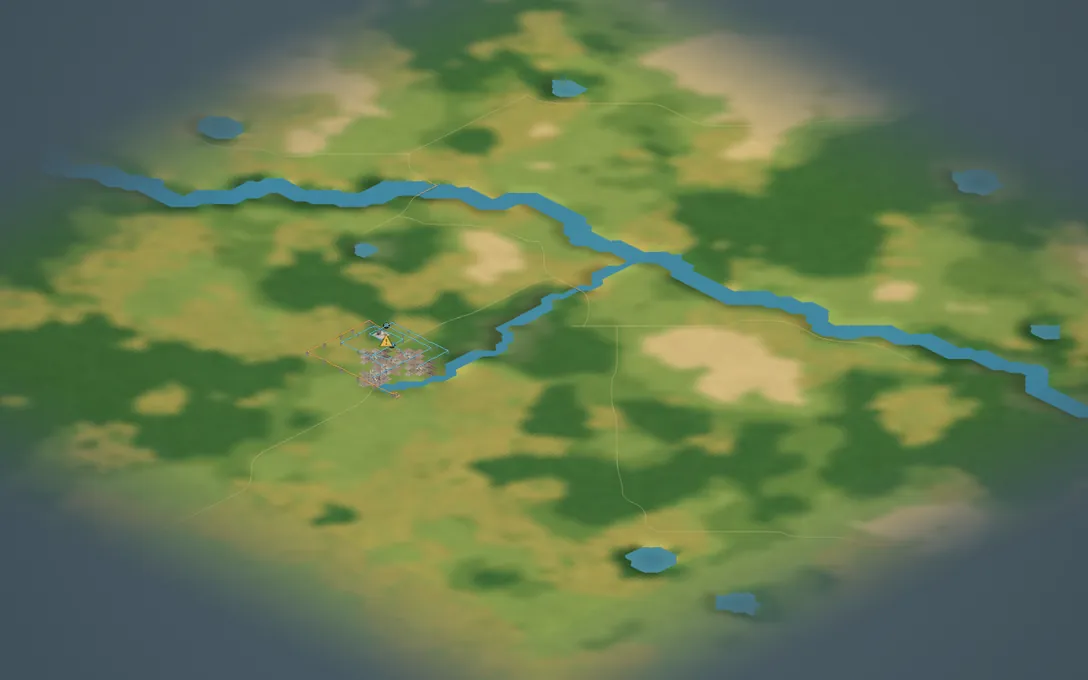
New colonies are founded on an island, a coast, a great lake or river country. Rivers wind across the map from their sources, lakes have bays and islands, and the map carries on past its edge into haze.
Roads, farms and herds
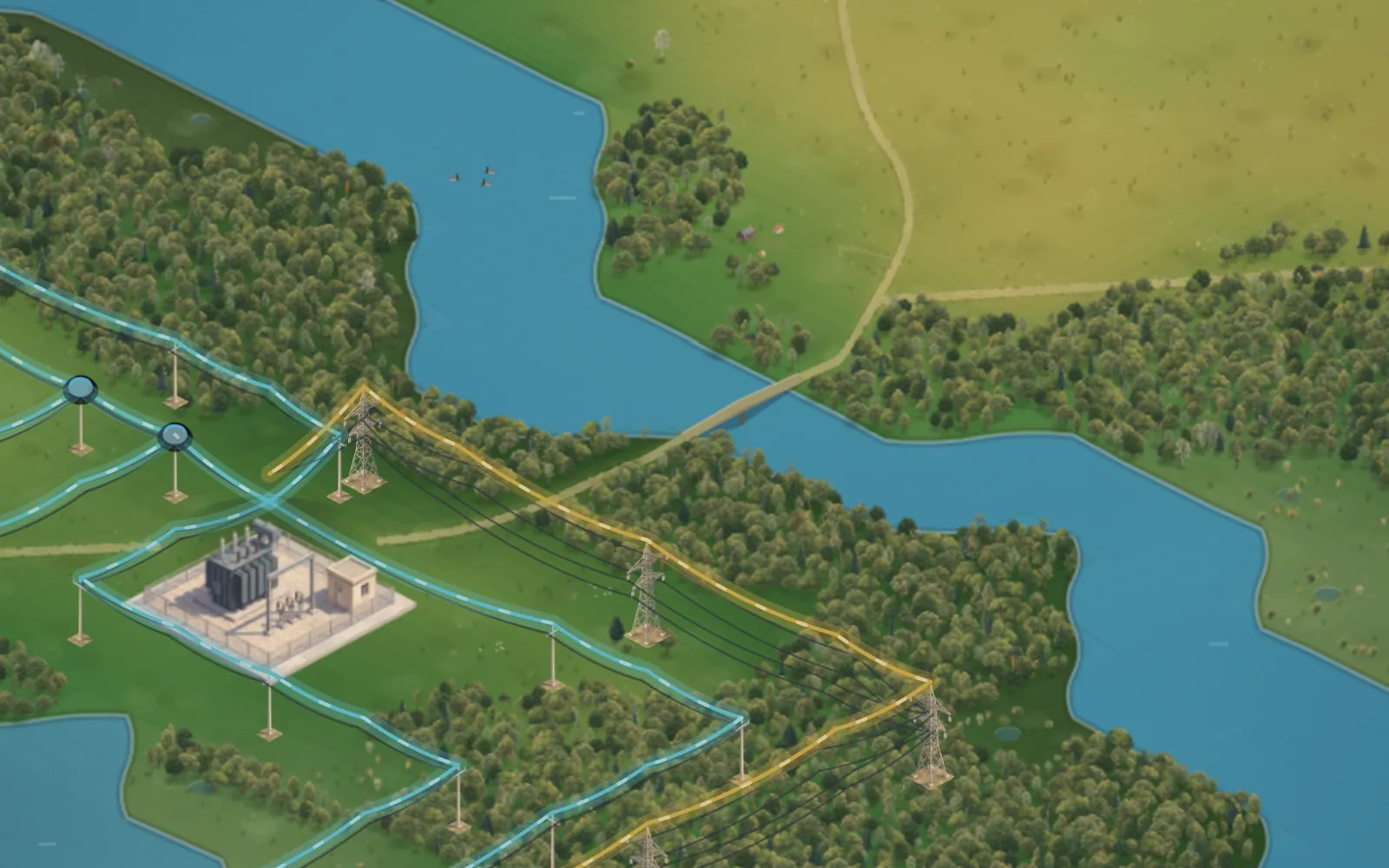
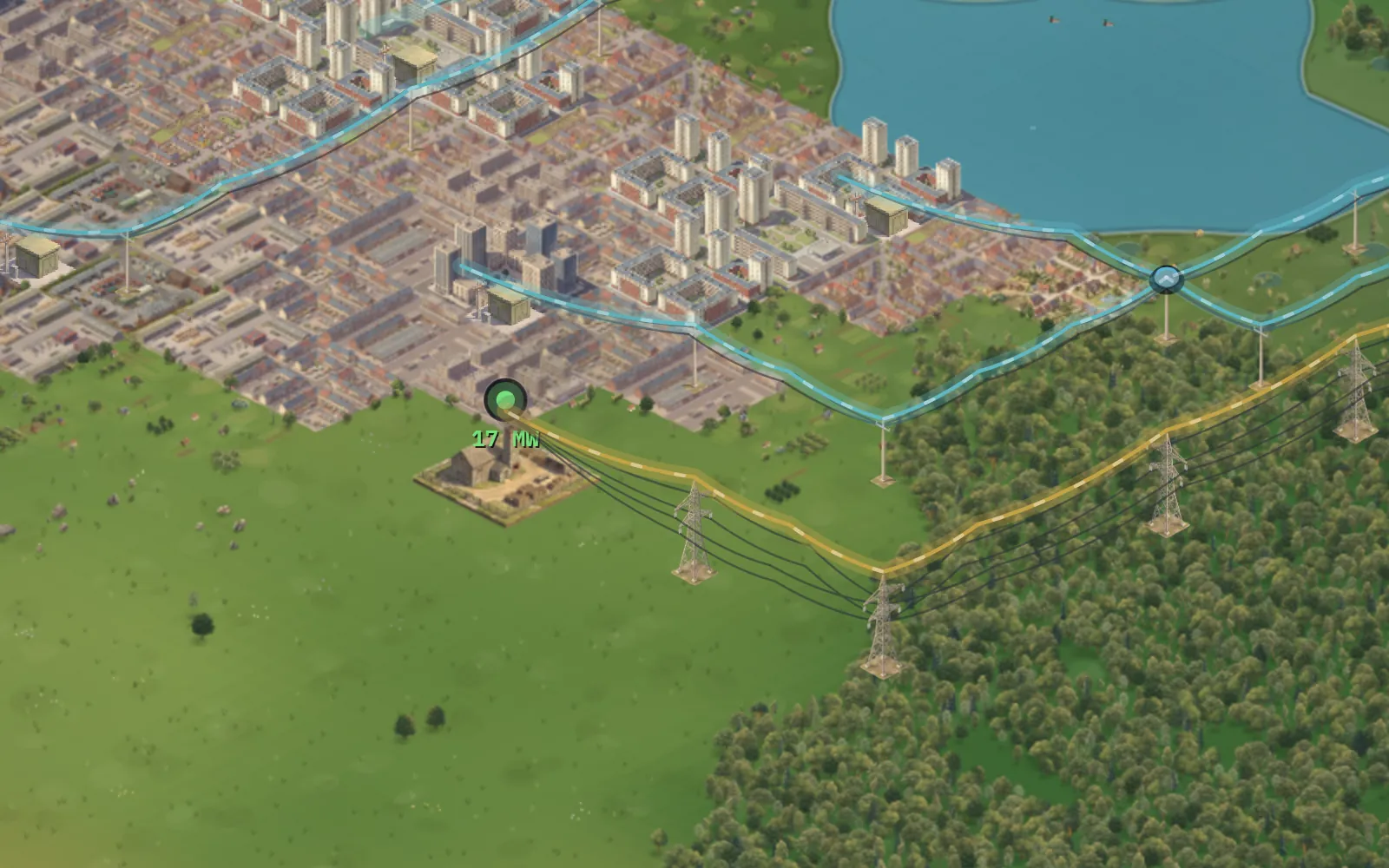
Country roads link the towns, with stone bridges over the rivers and farmsteads along the way. Woods are drawn tree by tree, fields are parcels with hedges, and town edges fade into gardens, orchards and cottages.
Herds, deer, waterfowl and boats move around the country.
Everything in 0.9.0
Every change in this update, as it is listed on the changelog.
- Districts: once the Grant Office is developed, draw named districts over your towns with a pencil on the new Districts map layer.
- Grants and the smart meter rollout moved from each local substation to the district, so one decision covers a whole neighbourhood.
- A district can pay a heat pump grant, or charge a levy on new heat pumps that households pay to you.
- A district can pay a retrofit grant toward insulation and other work on its buildings.
- A district can roll smart meters out to a share of its homes each month.
- A district can promote industry, paying the works a development rate while its industrial ground grows, or discourage it and let it shrink.
- The district card shows its people, homes, demand, heating and the stations that carry it, and what it cost you last month.
- The asset register has a Districts tab.
- An Emissions screen on the command rail shows every tonne the colony emits as a flow from fuel to sector to the atmosphere, for right now, a month, a year or the whole run.
- Hover a flow on the Emissions screen to trace it, or click a block to pin it. A table lists every source, its share and whether the carbon price reaches it.
- Industrial processes and farming are counted as sources of their own.
- A Heating map layer colours every block by how it heats. It outlines the heat networks, shows their pipes going in, and marks the network each town would lay next.
- The tile, district and town cards show how the homes heat. The tile card also shows what a block could switch to, whether that is the gas main, room for a wood store, room for a heat pump or a heat network in the street, and says why it heats the way it does.
- Most flats have no room for a heat pump, so a block of flats heats with gas or electric heaters unless a heat network reaches it.
- Oil and LPG move to gas where the gas main reaches, and a rising carbon price moves gas to heat pumps. Wood holds. Firms decide on a steeper curve than households.
- A district’s boiler rule takes options away on the day a boiler is replaced. Homes it moves off the choice they would have made cost opinion for about a year, less where a heat pump grant paid part of the bill.
- Electric heaters are a load of their own: storage heaters charging overnight in homes, and panel heaters at work. Station cards show them.
- The emissions screen gives oil, LPG and wood their own rows and heat networks their own sector. Statistics shows the colony’s heating mix over time.
- A dense town can start with a heat network, fed by local heat supply.
- Each September from the second year, a town lays a heat network where enough owners sign up and heat pumps would not heat the homes for less. Once its pipes are in, it extends to touching blocks the same way.
- A new heat network takes time: six months of planning, then pipes one block at a time, with first heat after about fourteen months. The homes on each block switch over within about three years, and a roadworks marker shows the block being dug.
- The town sets the heat price at what the heat costs to supply. Households on a heat network pay it, and a heat bill above gas makes them a little slower to buy cars, solar panels and insulation.
- Heat Network Supply: once a network’s pipes are in, its heat operator orders a large heat pump, then an electric boiler if your grid spills power. The game builds each one, you connect it to your 20 kV network by the date on the contract, and the town pays you for the cable.
- Once a heat pump on a network is running, the town builds its own heat store beside it.
- The town pays you the hour’s wholesale price plus $22/MWh for a large heat pump’s power, and runs it whenever its heat at that price costs less than local heat supply. An electric boiler runs only on power your grid would otherwise spill, and pays nothing for it.
- Town heat plant gives way first when your grid is short, before any home or firm, and local heat supply makes the heat instead.
- You can subsidise a heat network in a town that would not lay one yet. You pay part of the heat pipes, the town starts building now, and it takes that part of the pipes’ cost off its heat price for good.
- The carbon from local heat supply is on your carbon bill, like the colony’s gas boilers.
- Hydrogen Gas Grid: hydrogen your vessels have no room for goes into the towns’ gas by itself and is paid the bulk gas price. While any boiler there is not ready for hydrogen, the blend is capped at about 7% of the gas’s energy.
- Once you make hydrogen, a town may offer a contract for a set amount of it a year, for five years. Whatever is short at the end of a year, the town buys at the market price for hydrogen and bills you for it, plus a fine for each MWh.
- The town card can convert a town to hydrogen. You pay to swap every appliance that is not ready yet, and two or three years later the town burns your hydrogen and nothing else. You can stop a conversion, or take the town back.
- Finance shows the power you sell to heat networks, their carbon, your heat network subsidies, the hydrogen you sell to the gas grids, and what a town billed you for hydrogen you did not deliver.
- Finance shows heat pump levies and the industry development rate.
- New colonies are founded on one of four kinds of map: an island, a coast, a great lake or river country.
- Rivers wind across the map from their sources. Lakes have bays and islands.
- The map carries on past its edge into country and sea that fade into haze.
- Country roads link the towns, with stone bridges over rivers and farmsteads along the way.
- Herds, deer, waterfowl and boats move around the country.
- Cheap power draws people to a town. Below the price local incomes carry comfortably, a lower tariff grows the colony faster and lifts demand a little; a tariff near the limit of what people can afford slows growth before hardship sets in.
- The merit order decides which plants are started and shut down as well as which run. For each hour of the next two days it is run against the expected load, wind, sun and what the stores plan to deliver; a slow plant is started so that it is on the bars for the first hour it is in merit, and kept at its minimum through hours it is not when it would be wanted back before it could restart, or when keeping it warm costs less than the restart.
- In a surplus the dearest bid is backed off first, wind and solar included at theirs. A dam with a low lake is turned down to its licensed flow before any wind is curtailed; when the lake is at its spillway, wind is curtailed first.
- A plant that stops for a short while restarts hot: faster, and at 40% of the cost of a cold start. Before, every restart was cold.
- Once the control room is developed, the dispatcher keeps enough firm plant on to survive losing its largest machine. A battery answers a trip in a second and counts as that reserve, so a colony with storage carries no extra iron; one leaning on a single big unit keeps a second on at its minimum load. The desk shows whether the fleet is N-1 secure.
- When a running machine trips, the frequency now falls at a rate set by the spinning mass on the bars. If the fast response cannot catch it, underfrequency protection sheds load to hold the frequency up, and if even that is not enough the colony cascades to a blackout. Carry a battery or a second machine behind your largest unit, or a trip takes customers with it. The control room shows the depth of the last dip.
- The control room shows the system’s spinning mass in seconds, and how fast the frequency would fall if the largest running plant tripped. Wind, solar and batteries carry none of it, however much they are generating.
- The balance panel shows Response, what answers a falling frequency within seconds, and Headroom, what the fleet could add within the next quarter hour.
- A plant warming up to run shows as Starting up until it is on the bars.
- Batteries, dam reservoirs and stored hydrogen are valued on a two week forecast of demand, wind, sun and river flow, and of what the rest of the fleet would cost to run instead. The recent average price no longer sets what stored energy asks for.
- On the policy desk, Selling price is now Value of stored energy, What to pay to charge is set as a share of that value, and When to burn it scales the same forecast for stored hydrogen.
- Build cards and asset cards show Variable production cost, and Dispatch value where a plant is run at a different figure.
- The dam card says how the operator plans its water two weeks ahead.
- Station cards name the districts their streets are in, and a block’s card can start a district from that block.
- Woods are drawn tree by tree, so their edges are ragged instead of square.
- Fields are drawn as parcels with hedges.
- Shores are rounded, with a wet band and foam, and water gets deeper away from the shore.
- Town edges blend into the country with gardens, allotments, orchards, cottages and farmyards.
- Gas for homes costs less in Long Winter. At the start, a gas boiler heats for less than electric heaters in every scenario but Mandate, where gas is dear enough that electric heaters compete.
- Thermal plants change their output at a limited rate. A reactor or a coal station moves slowly; a gas turbine still reaches full output in minutes, which is the reason to own one.
- Plants take time to start from cold: minutes for a gas turbine, hours for a coal station, a day and a half for a reactor. Starting one costs fuel and service life, so a plant kept running is cheaper than one cycled daily.
- A battery covering the evening peak is now a coal station that does not have to be lit for it, rather than only the energy it stores.
- A supercritical coal plant is more flexible than an ordinary one, not less, which is true of the real machine.
- The build card quotes a plant’s ramp rate only where it can actually hold the machine back.
- Capacity not called on is now Capacity standing idle, and no longer counts a cold plant that would take hours to start as though it could answer now.
- The plan for the day ahead ranks plants with your internal carbon price included, so it decides what is started as well as what runs.
- The plan for the day ahead counts a battery for what it can hold up through the whole evening peak, not its full power for one quarter hour, so a low battery no longer keeps a coal station cold.
- The clearing price reads $0 in a surplus and $10,000 per MWh while load is being shed, the game’s value of lost load. Dynamic contracts pass it on up to $1,000 per MWh; fixed contracts do not.
- Saves: old runs load and keep the map they were founded on. A substation that offered grants becomes a district of its streets at the same rates. Plants are on the bars as they were, and the stored energy forecast is built at the next dispatch.
- The fair price was the cost of supply plus 22%, so an expensive fleet was allowed a bigger margin than a cheap one. It is now the cost of supply plus $22/MWh, and opinion, city growth and the regulator read your tariff in dollars above it. Demand reads against what local incomes carry instead. The pricing desk’s dial above the fair price is in dollars too.
- A dam was held at 40% of its plate through quiet hours whatever the lake held, draining a low lake overnight and spilling wind beside it.
- A plant that finished warming up and was walked off in the same interval paid nothing for the start. It now counts, and the plant stays on for its minimum run from the moment it arrives.
- A hydroelectric dam switched on and off between one moment and the next like a battery. It now runs above a minimum load or waits, and always passes a little of its river.
- Damming one river refused you the next river along. Two dams may not share a stretch of the same water, but two rivers that happen to run close together are two rivers, and each will carry its own dam.
Play 0.9.0 now
No account and nothing to install. Your run is saved in your browser.