Towns Redrawn & Faster Sim
Homes use power at a realistic rate, and towns grow outward faster. A new development, Load Sharing, moves streets off full Local Substations onto neighbours with room at the end of every year. New towns arrive with nothing built until you take them on. The Challenge moves to the new growth rules and keeps its scores. Towns, rivers and dams are redrawn, and the simulation takes about 30% less time.
Power use and town growth
Up to 0.9.6, every home in your colony used 2% more electricity each year. That came on top of the heat pumps, electric cars and air conditioners the game already adds one by one. Heating and cooling grew by the same 2%.
I measured a well run colony over 30 years. On the streets its first Local Substations carried, the load grew about 6% a year. Grid operators planning for heat pumps and electric cars expect about half that, and a European home uses slightly less electricity than it did ten years ago.
In 0.9.7 each home’s appliances use about 0.5% more power a year. Heating and cooling change only when homes insulate, buy air conditioning or the climate warms. Your towns grow outward instead: a new town every 3 to 6 years instead of every 4 to 8, and new streets twice as often. A town block stops filling at about the density of Manhattan.
Your runs change in these ways:
- Local Substations fill more slowly. On the same streets the load grows about 4% a year, down from 6%.
- You reinforce Local Substations less often and build more of them for new streets.
- Your colony uses less energy late in a run, so every world’s par is lower. Standard goes from 301,042 to 230,581.
- Scores from 0.9.7 and 0.9.6 are on different scales. Your run history keeps them apart, and the field on the end screen starts again.
- Colonies you started before 0.9.7 keep the old growth and the old scores.
- The Challenge plays the new rules. Every score stays on its leaderboard, and each one shows the game version it was set on.
- The same play scores about 9% less on the new rules, so the old scores at the top are harder to beat.
- A Challenge run you started before 0.9.7 finishes on the old rules and still counts.
- In the Challenge, new towns now land on the same ground for every player.
Automatic load sharing between Local Substations
Load Sharing is a new development late in the tree, in System Integration. It needs SCADA & Smart Metering and Asset Management, and costs 900 points.
With it, your planners move streets between Local Substations at the end of every year. Any Local Substation over 90% of its rating hands the streets on its edge to neighbours that stay at or under 90% with them. The fullest goes first.
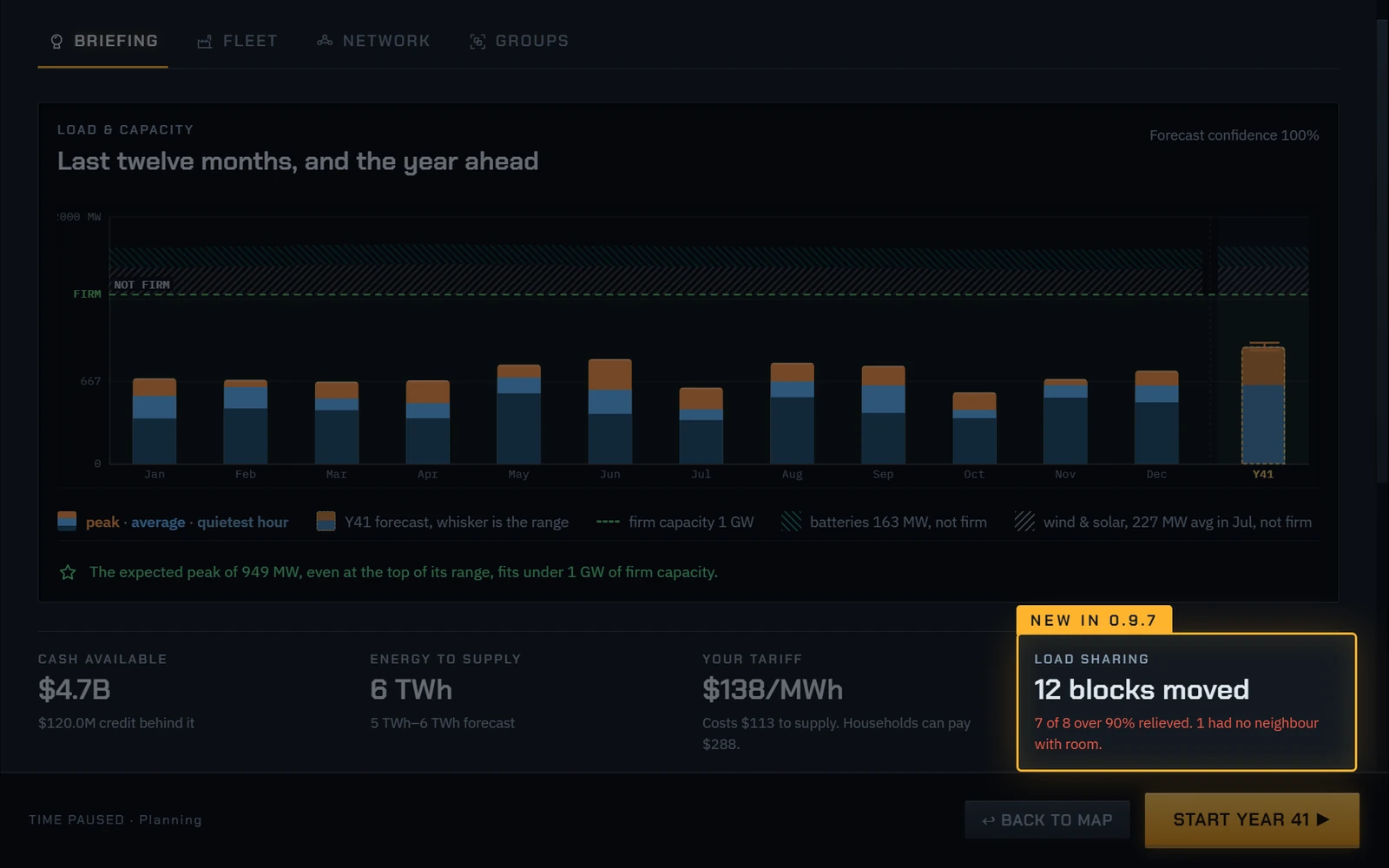
When you continue into the next year, the planning screen shows how many blocks moved and how many Local Substations they relieved.
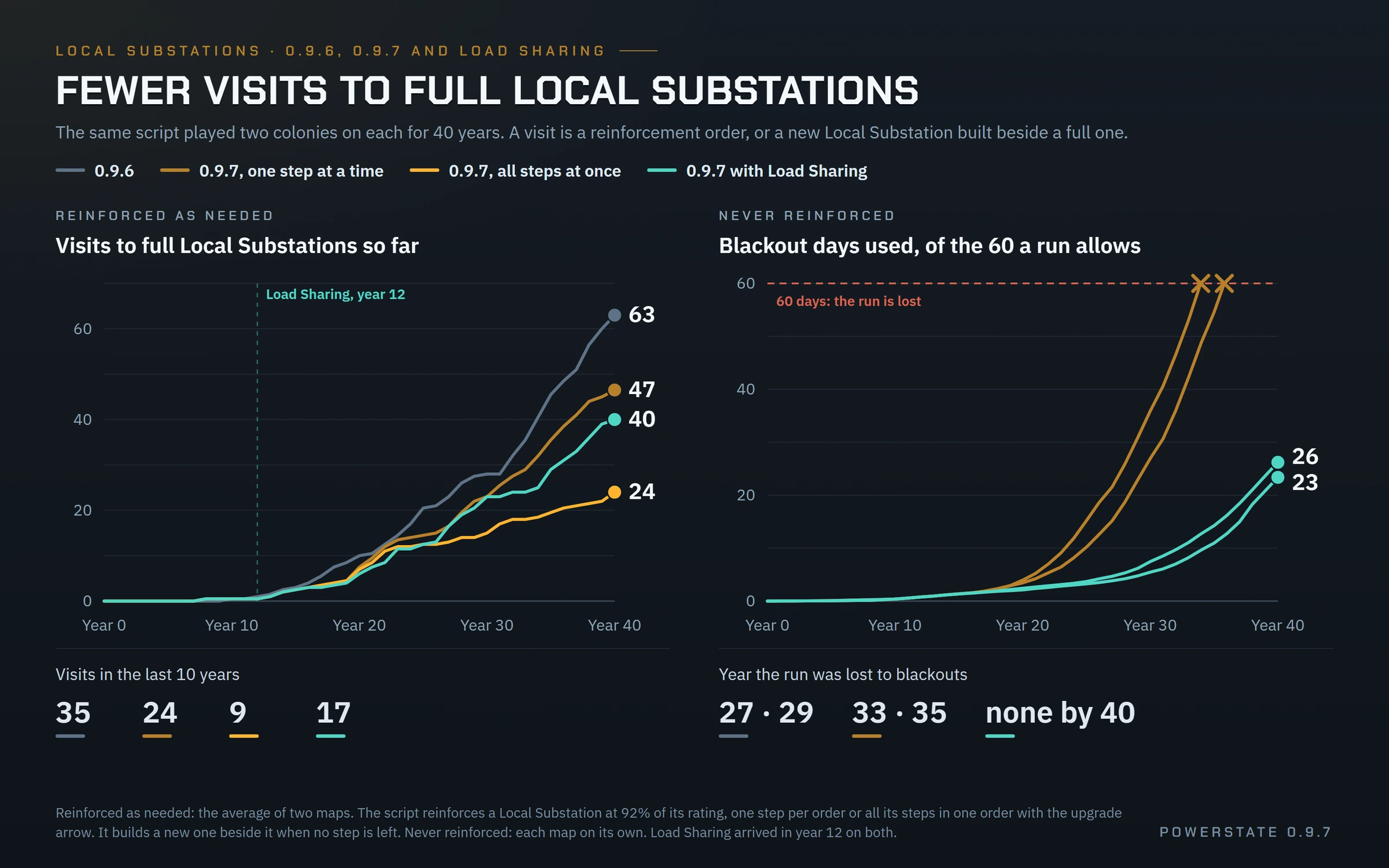
Up to 0.9.6, a growing colony needed more and more work on its Local Substations. Late in a run you reinforced one every few months and built new ones beside those with no step left. I measured it on both releases, and on 0.9.7 with Load Sharing. The same script played two colonies on each for 40 years and reinforced every Local Substation that reached 92% of its rating. A visit is a reinforcement order, or a new Local Substation built beside a full one. Load Sharing arrived in year 12.
- Played the same way, a colony needed 47 visits to full Local Substations in 40 years instead of 63. With Load Sharing it needed 40.
- Ordering all its steps at once with the upgrade arrow, it needed 24. With Load Sharing it needed 22.
- Load Sharing does most of its work late in a run. In the last 10 years a colony needed 17 visits with it, against 24 without and 35 on 0.9.6.
- Never reinforced, the colony lost the run to blackouts in year 33 or 35 instead of year 27 or 29.
- Never reinforced with Load Sharing, it was still running at year 40, with 23 to 26 of its 60 blackout days used.
- Never reinforced, a full Local Substation had a neighbour with room for some of its streets 91% of the time, up from 54%. That room is what Load Sharing uses.
- Over 28 years Load Sharing moved about 70 blocks. It relieved 96% of the Local Substations it found over 90%.
- If a Local Substation is still over 90% after the planners are done, no neighbour has room. Reinforce it or build one beside it.
- No Local Substation used up its reinforcement steps, so none needed a new one beside it. On 0.9.6 it took 8.
- All steps at once take longer to install, so order them before the Local Substation is full.
- You build more Local Substations for new streets: about 100 in 40 years instead of 35. Towns spread further and new towns arrive with none.
- To move streets yourself at any time, select the Local Substation with room, press Assign streets and click the blocks it should take.
Take a new town on when you are ready
Up to 0.9.6, a new town arrived complete with its 110/20 kV substation, its Local Substations and the feeders between them. All you had to do was bring a 110 kV line.
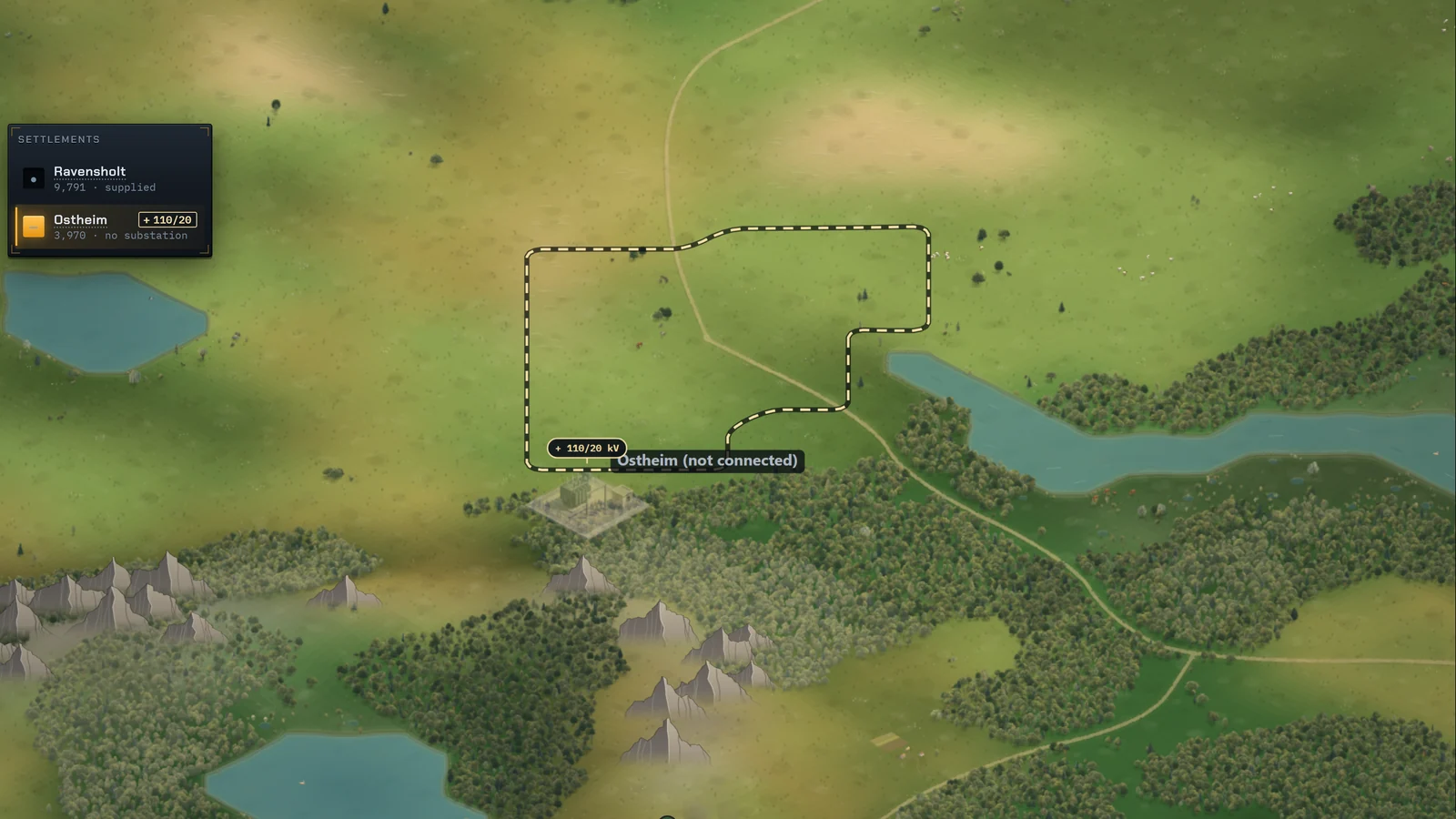
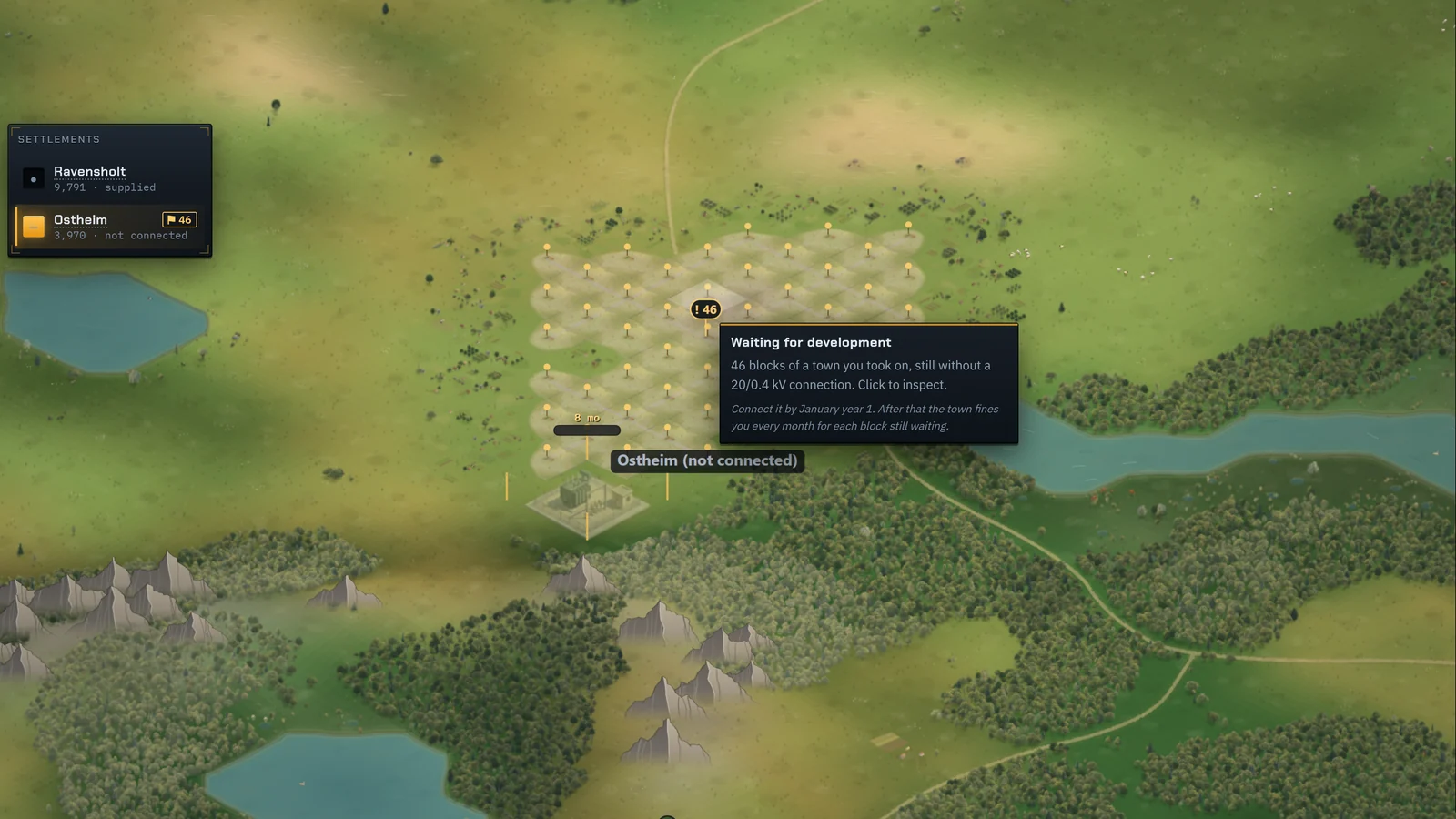
Now a new town arrives as an outline on the map, with nothing built inside it. A see-through substation marked + 110/20 kV shows where its substation goes. Nothing is owed and nothing is fined until you decide to take it on.
Build a 110/20 kV Substation on the site when you are ready. The town’s streets are then laid out inside the outline, every block waits for a Local Substation, and you have 12 months to connect them. After that the town fines you every month for each block still waiting.
- Click the + 110/20 kV mark to pick the substation tool. The town’s flag in Settlements takes you to the site.
- The substation takes 8 months to build and a Local Substation 4, so start the 110 kV line at the same time.
- Nothing can be built inside the outline while the town waits, and no Local Substation until its substation is placed.
- The contracts that ask you to energise a town work as before.
- Colonies started before 0.9.7, the Challenge and the Academy still found new towns complete.
Towns built house by house
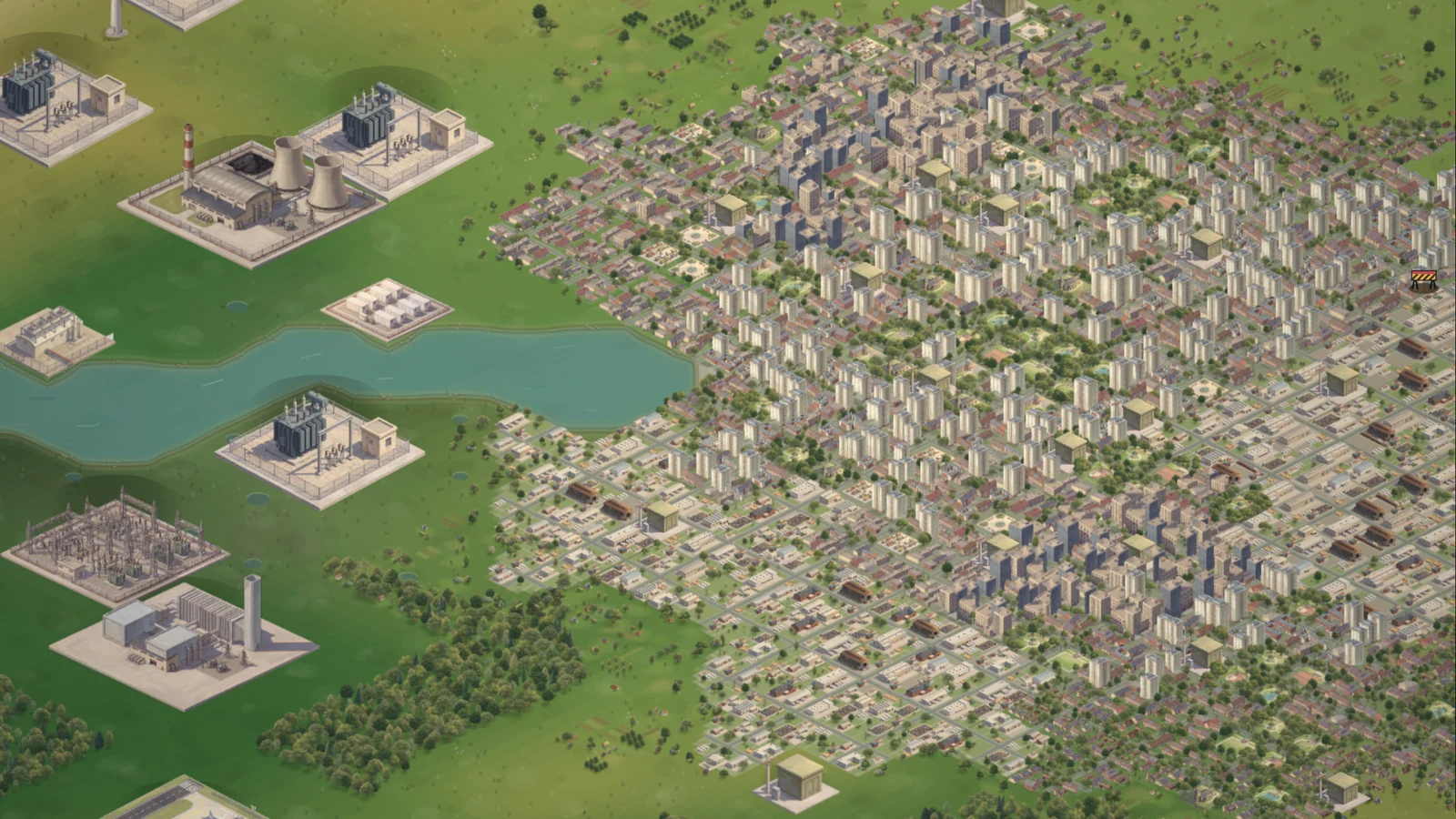
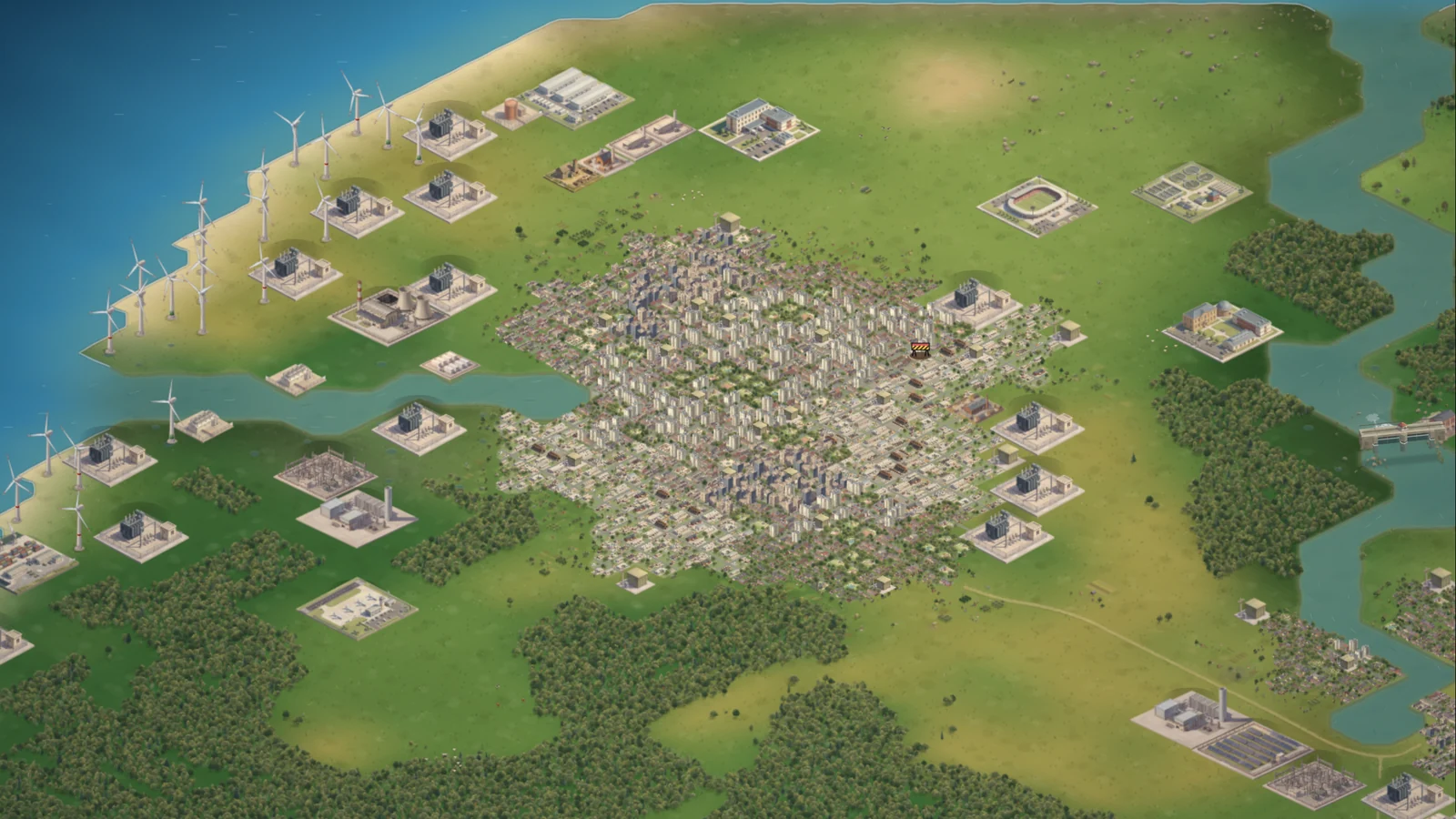
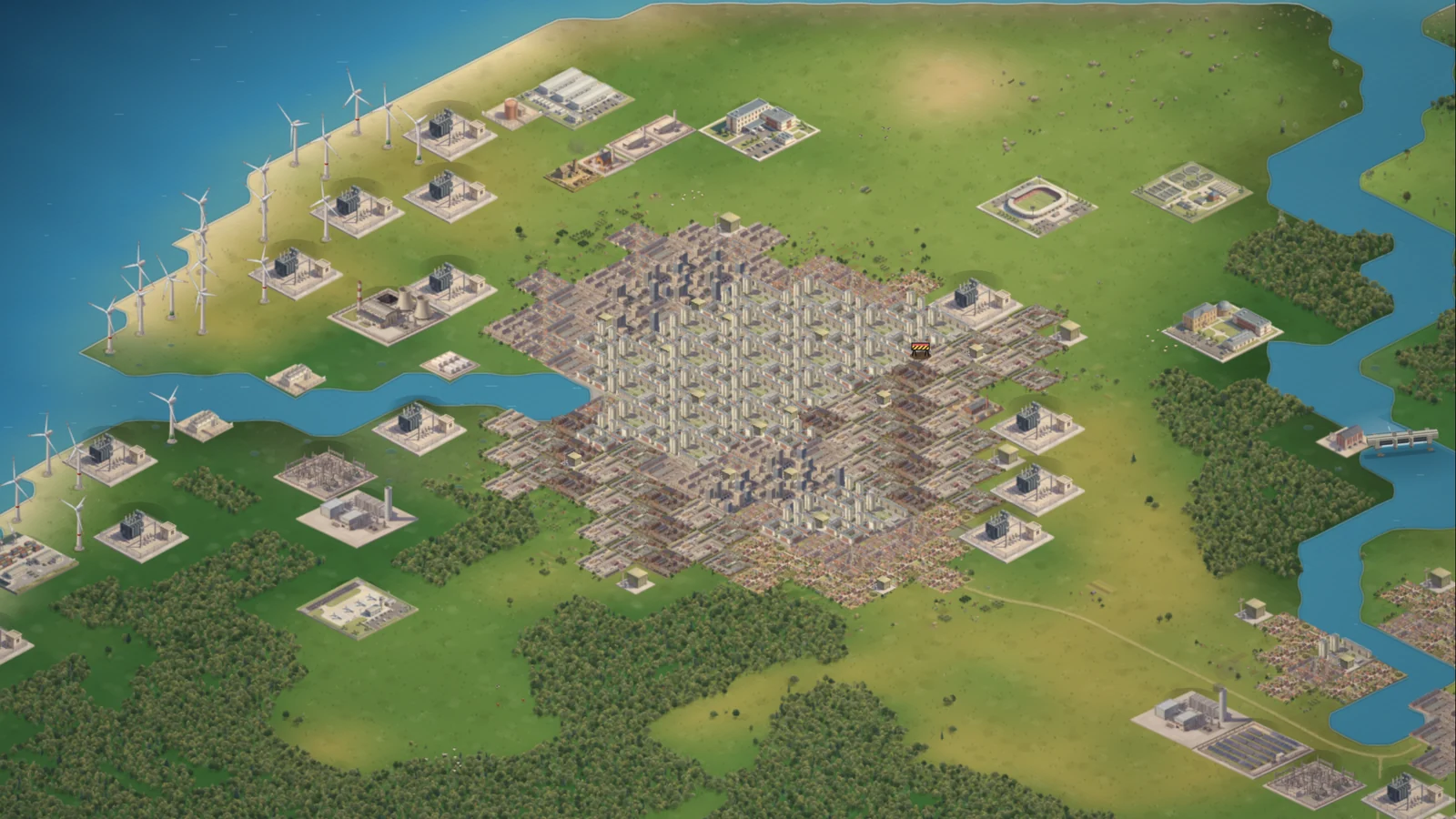
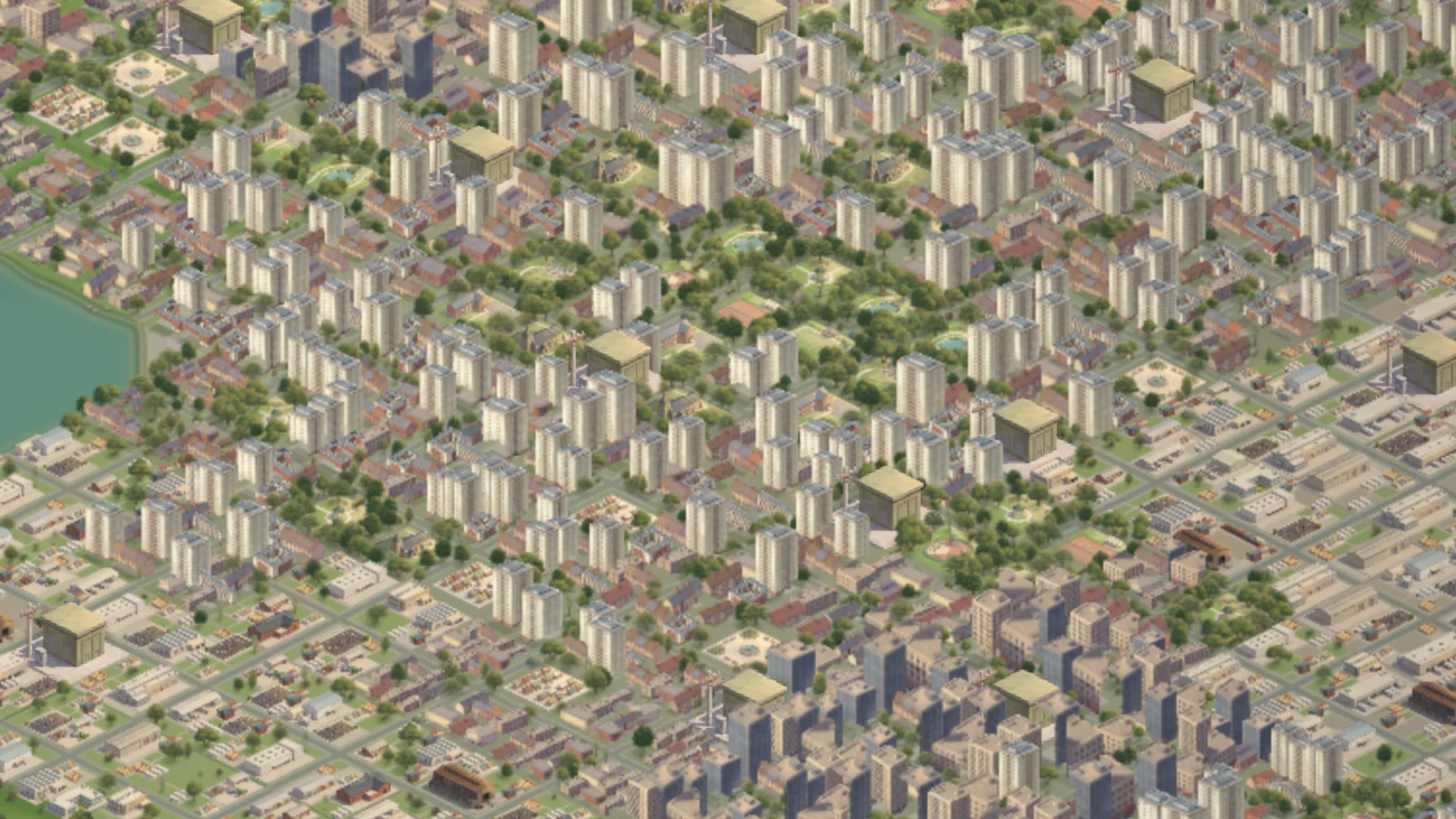
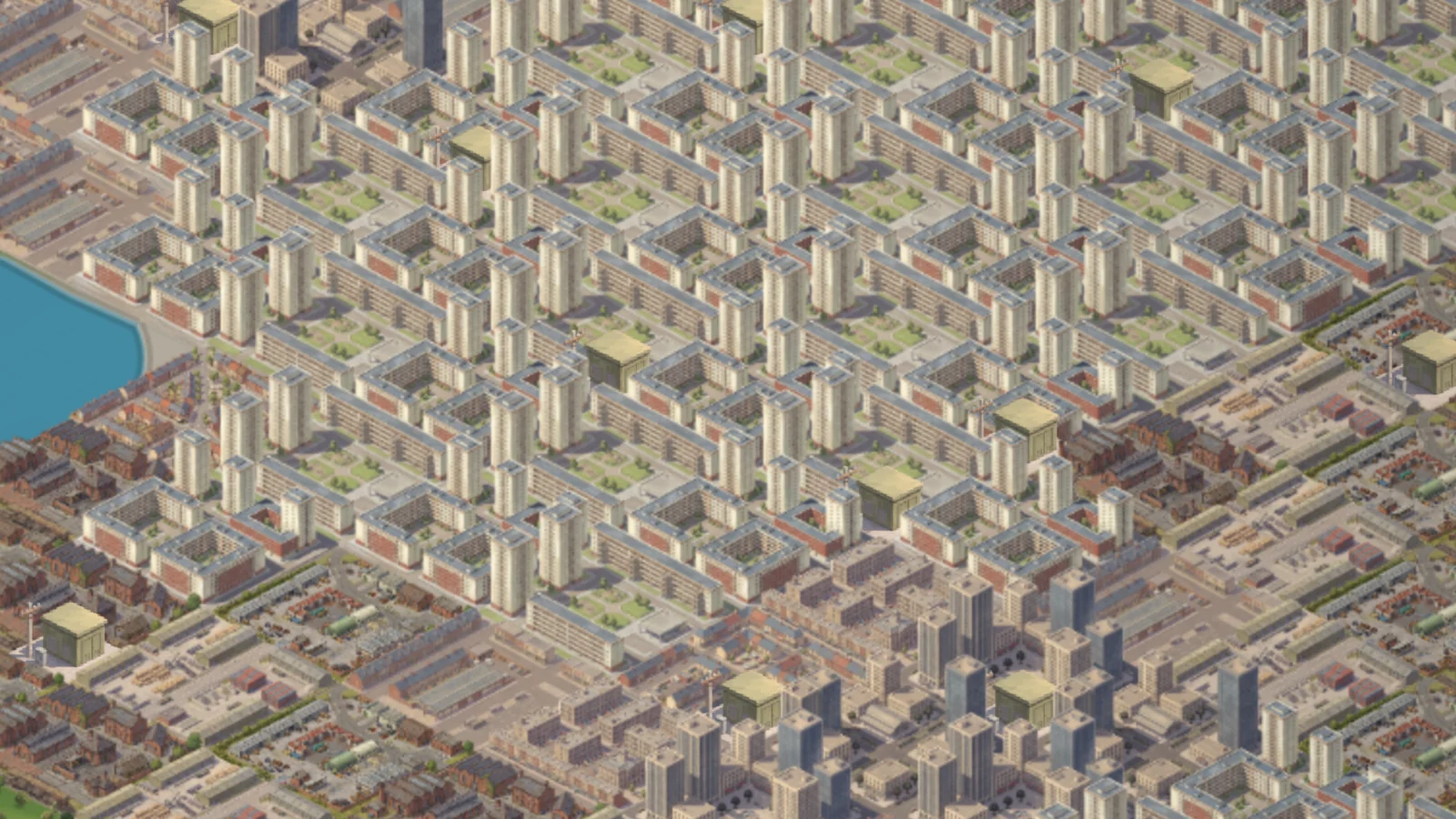
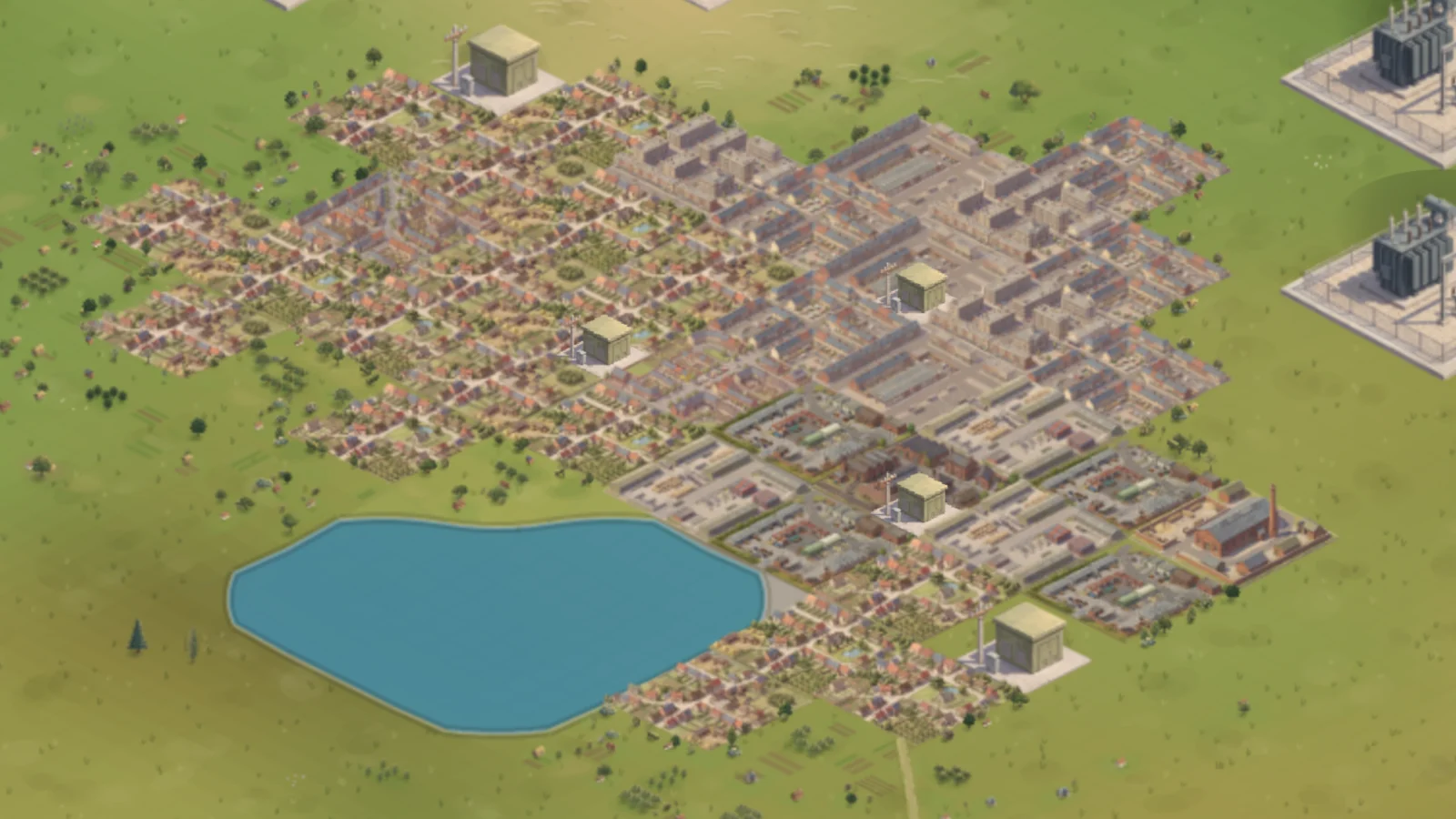
A block of town used to be one painting, repeated across the town. Now each block is laid out from separate houses, shops and towers, in 64 layouts for every kind of district and density, so the same block no longer repeats.
The same Year 40 colony on both releases, same day, same hour. Drag across a picture to wipe between them.
- The busier a district, the taller its buildings.
- Parks, ponds, playgrounds, sports grounds, churches, schools, markets and allotments.
- Suburban streets are lined with trees.
- Only the drawing changed. The same homes draw the same power, and saves are not affected.
Industrial estates
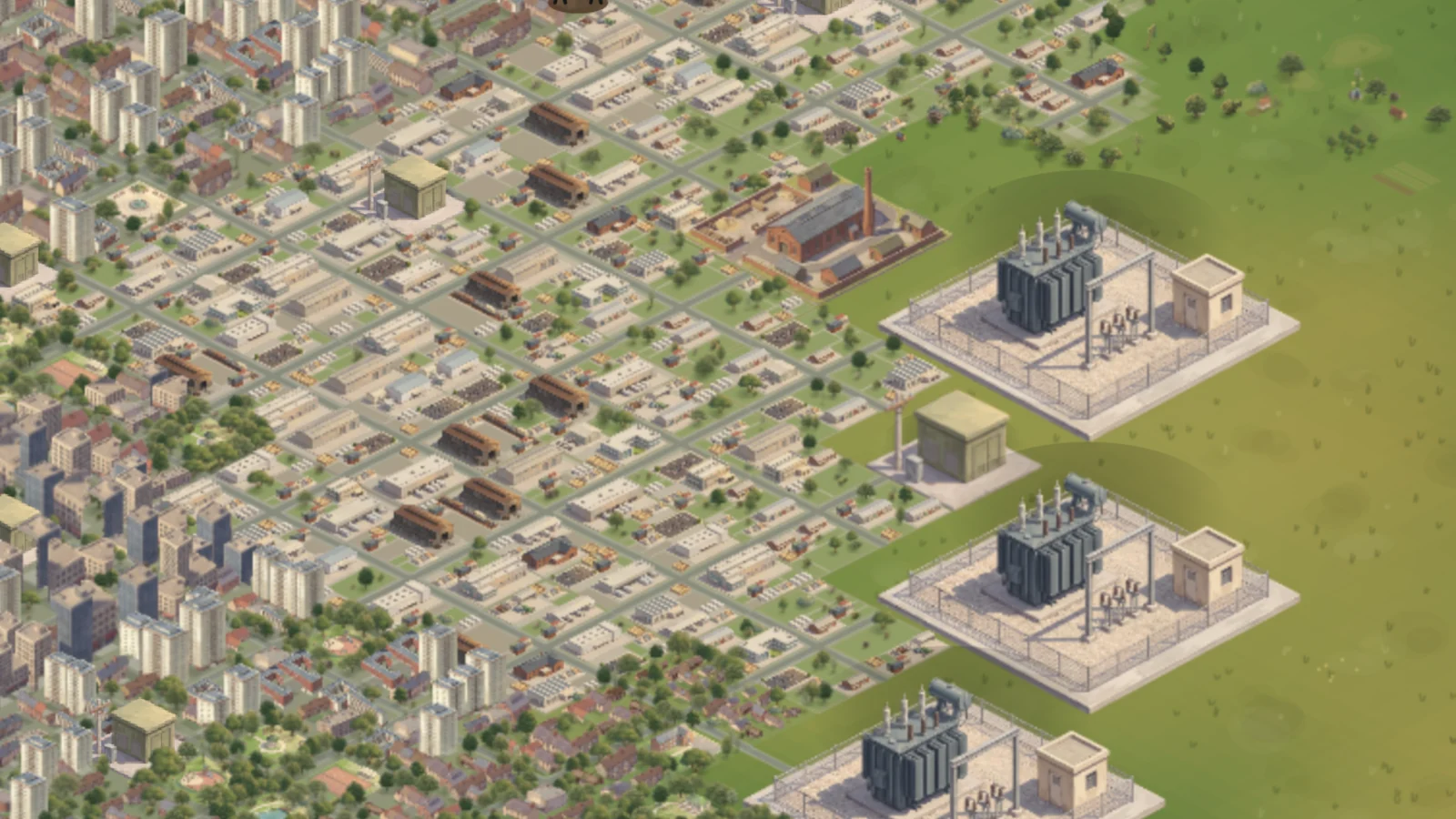
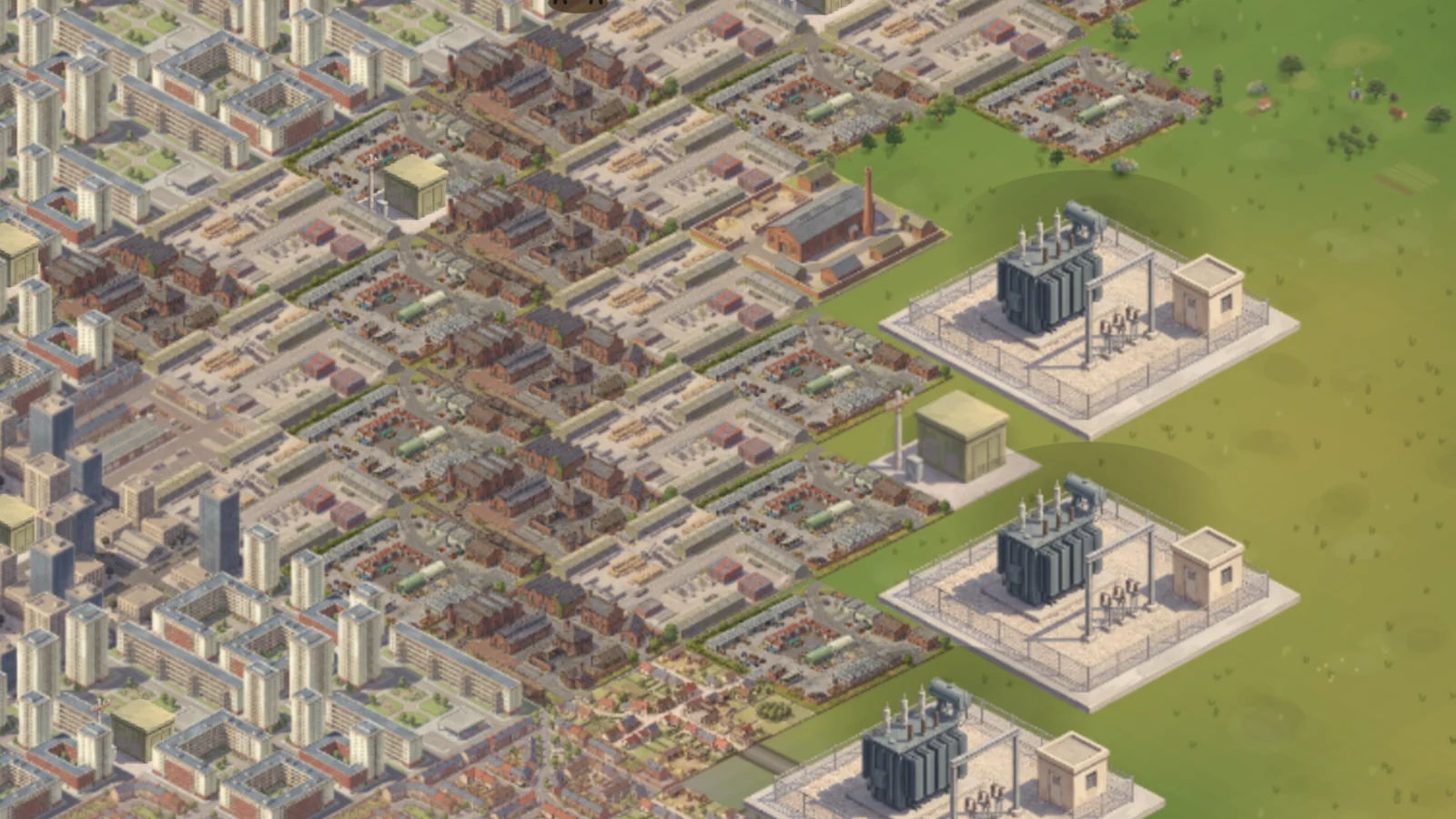
Industrial districts are estates of pale sheds, works, staff car parks, yards and the odd rail siding, with grass and trees in between. 23 painted pieces, packed differently on every block.
Towns end in gardens
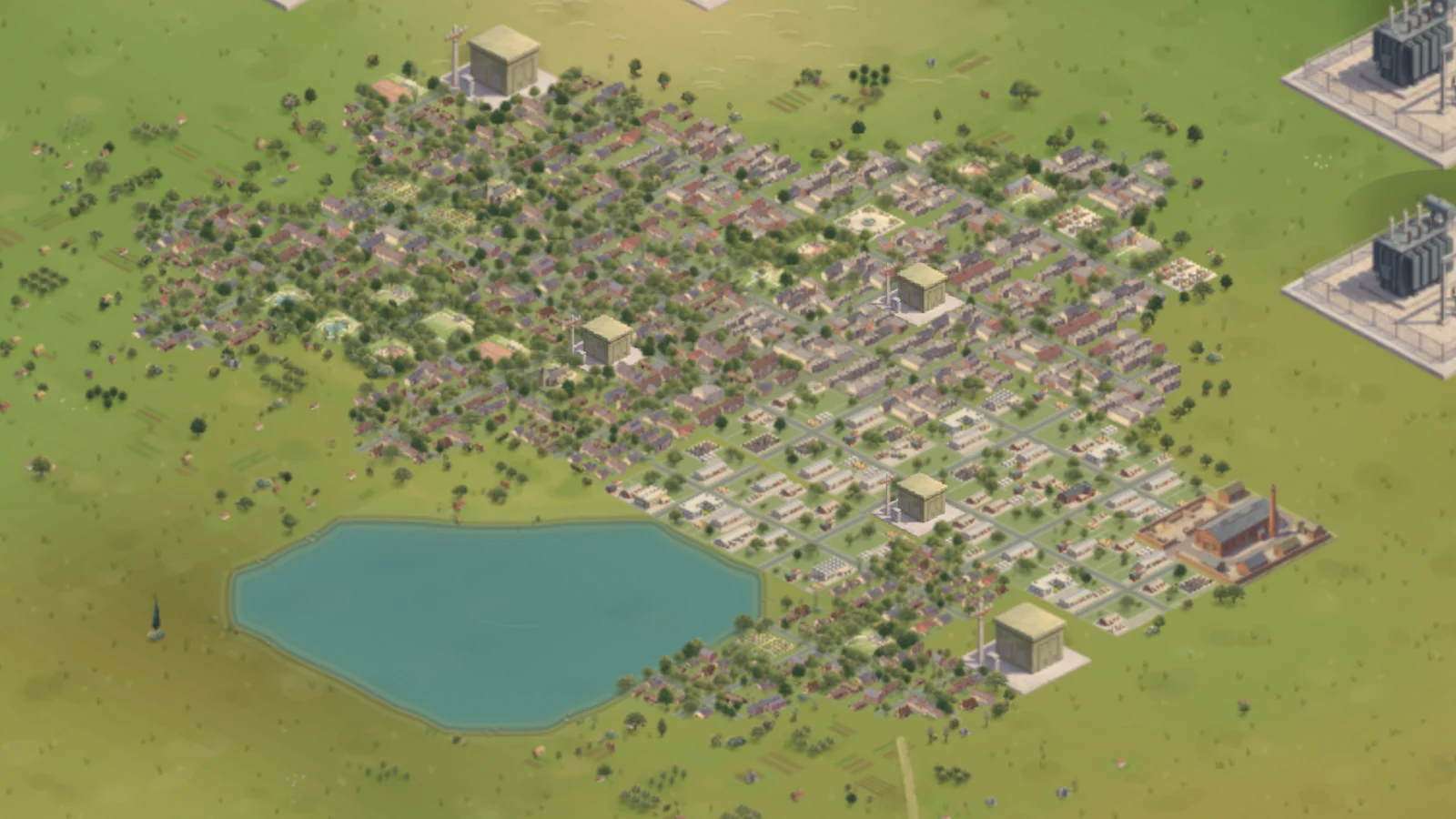
A town used to end where its tiles ended, in a staircase of straight cuts. Now it ends on a smooth line, building by building, with gardens and trees where the houses stop.
- Houses on a tip of shore stand on ground now, not on painted water.
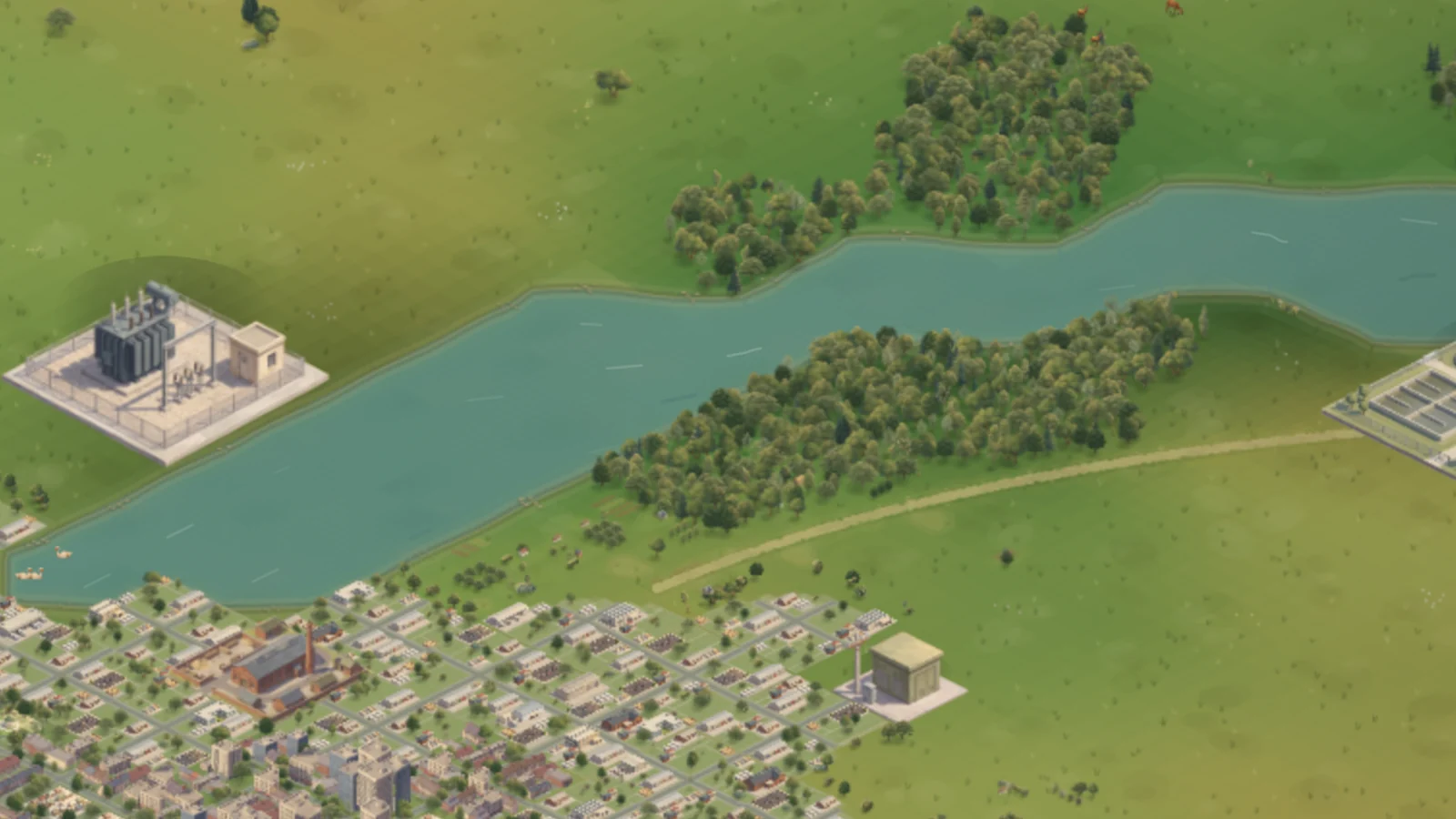
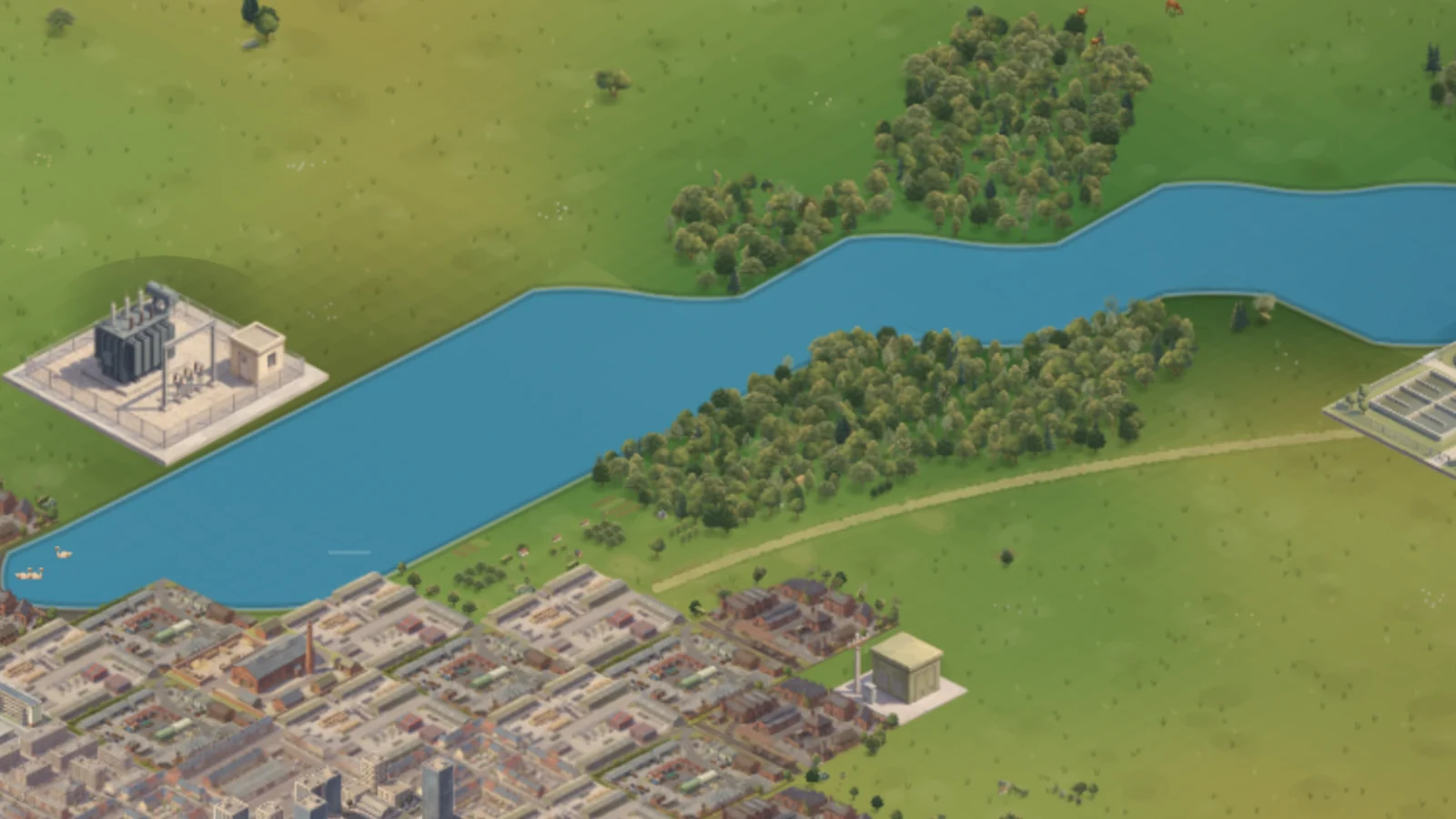
Rivers and lakes
Rivers and lakes lost their bright outline. Their banks have shallows, damp earth, silt and reeds, and the current on a river shows which way it flows.
A painted dam
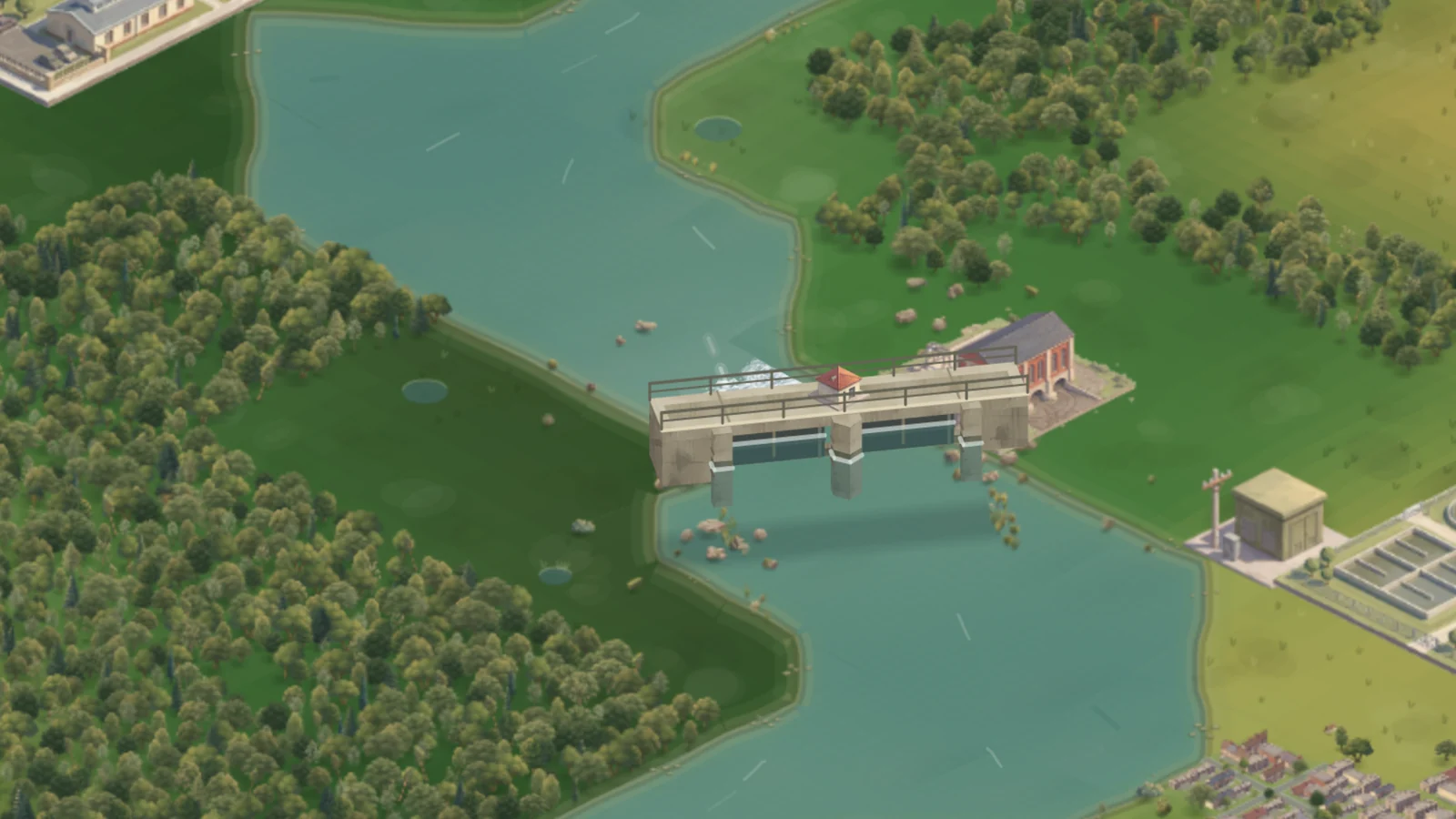
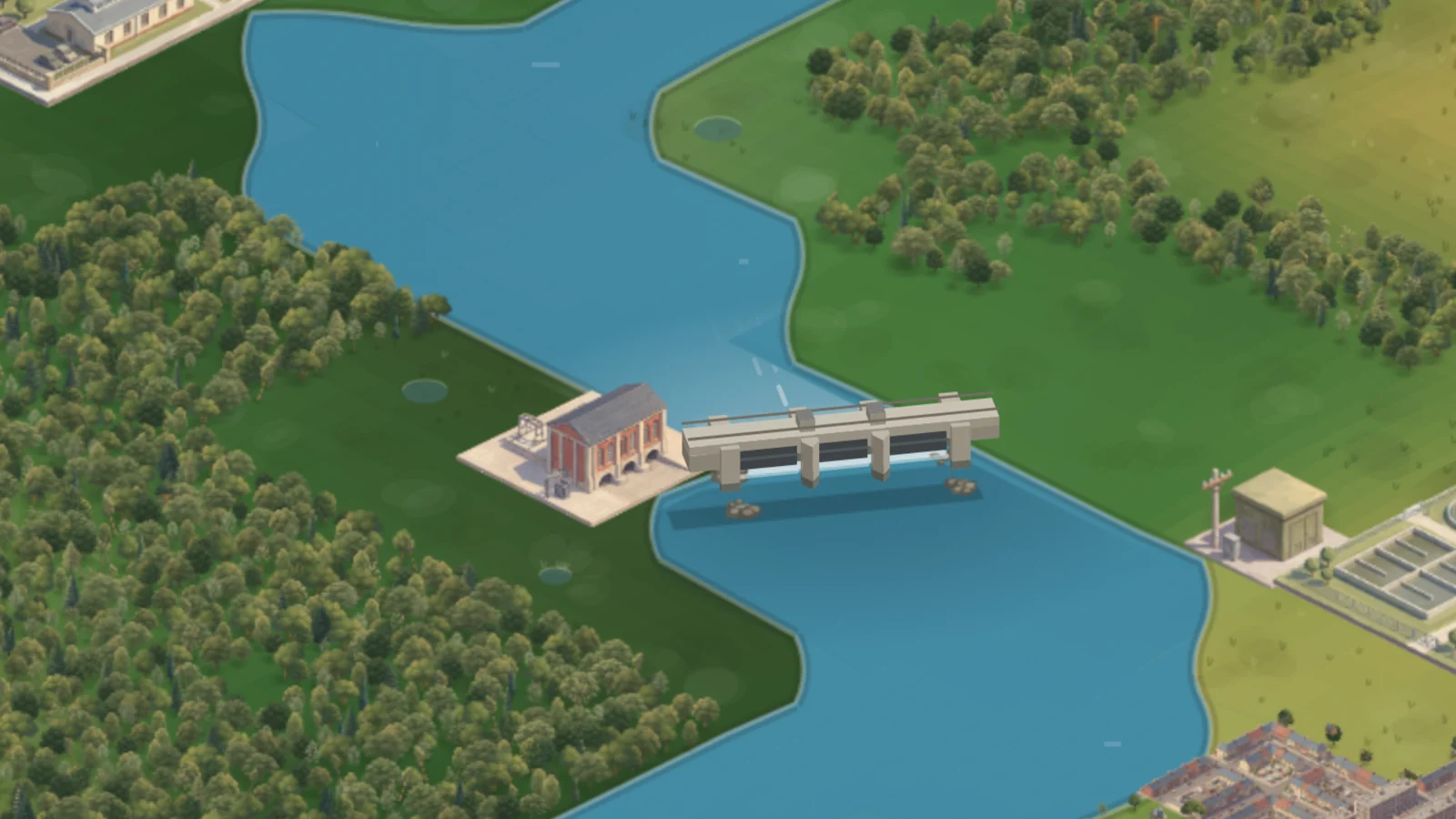
The dam is still drawn square to its river at any angle, but what you see on it is painted: white water below the gates, a gatehouse on every pier and weathered concrete.
Its banks carry rock, reeds and shrubs, and its powerhouse stands on the bank.
- Some dams faced up their river. Every dam now spills downstream.
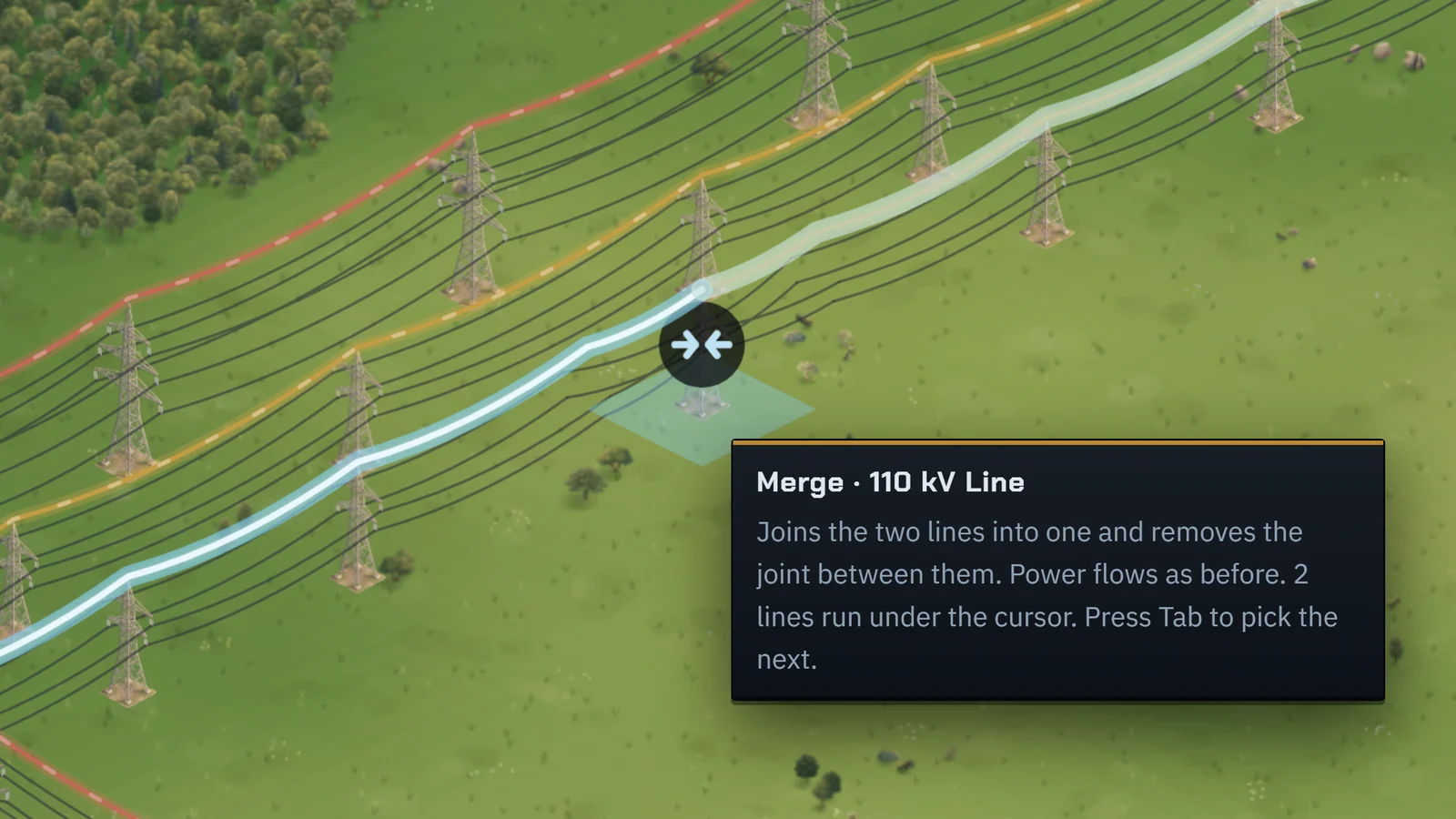
Join two lines into one
Merge sits next to Split on the build bar, key M. Click a line, then the line it meets end to end, and the joint between them goes. The route and the flow stay the same.
The joined line stays picked, so a run cut into pieces joins back up with one click per joint.
- Free and immediate, like Split.
- Both lines need the same conductor and the same switch setting, and nothing else may stand on the joint.
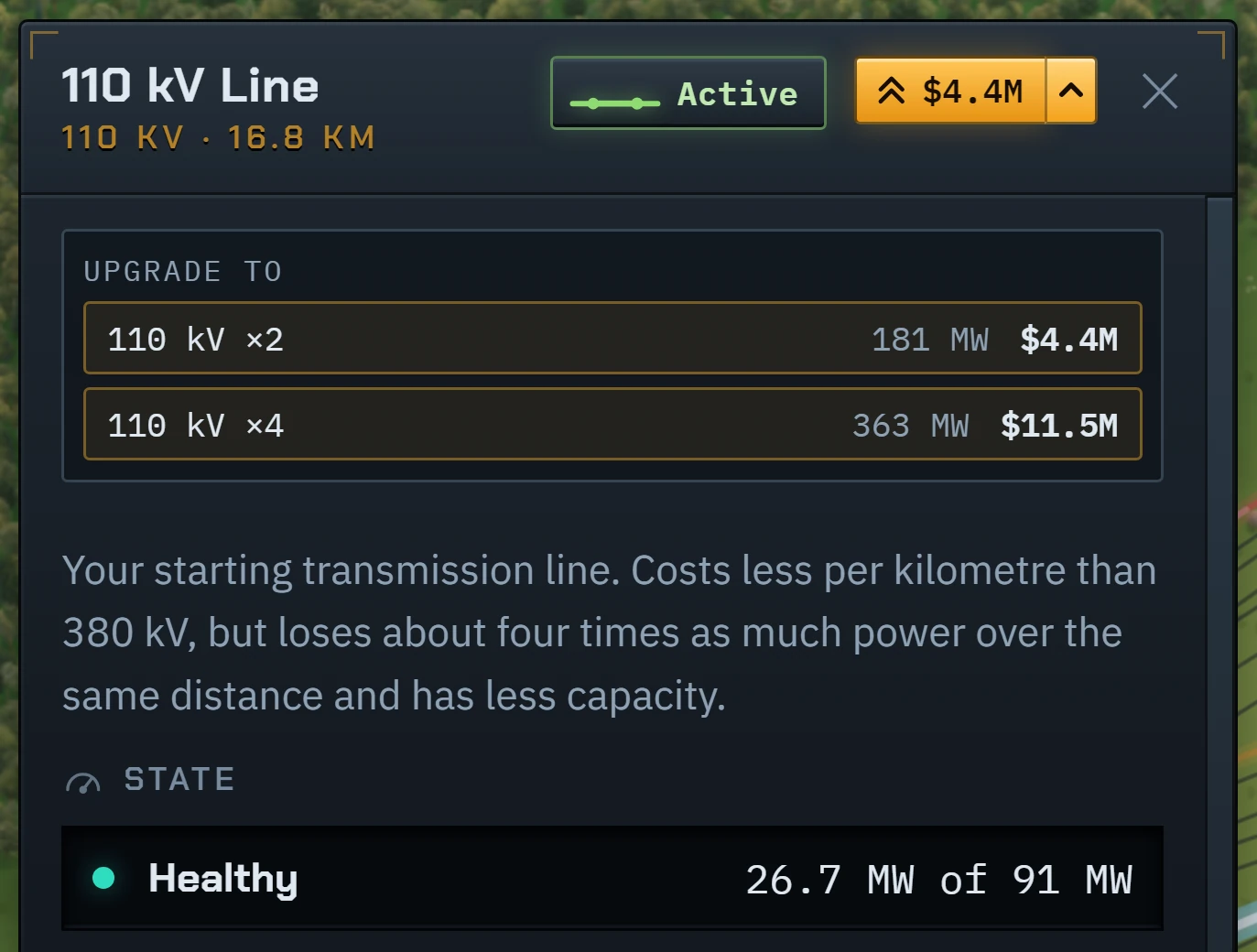
Skip straight to a later upgrade
When a line or a substation can take more than the next step, its upgrade button gets an arrow. It lists every step with its rating and price, and buys straight to the one you pick.
A line jumps to the conductor you choose for the price of the steps between. The button itself still buys the next step in one click.
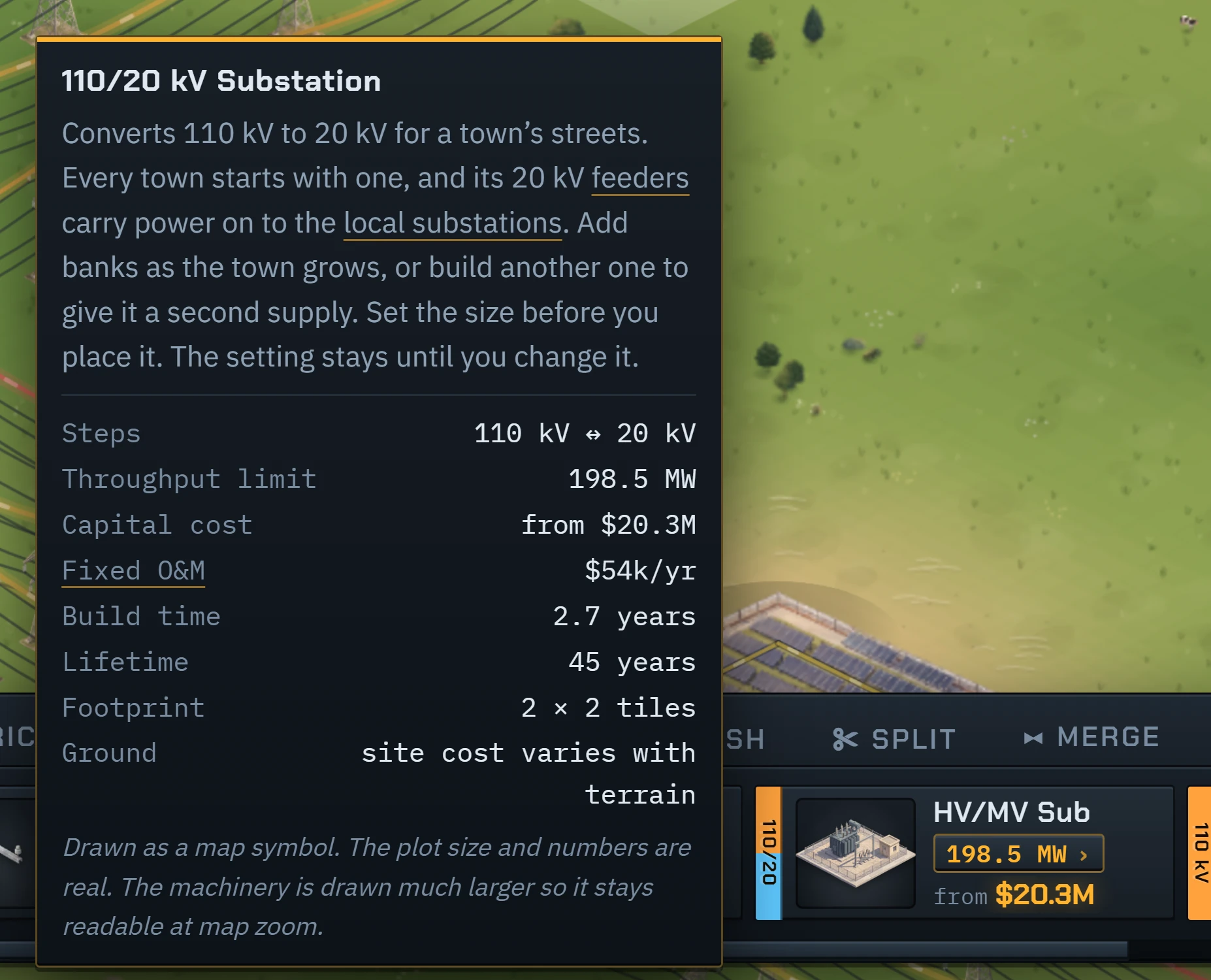
One 110/20 kV substation
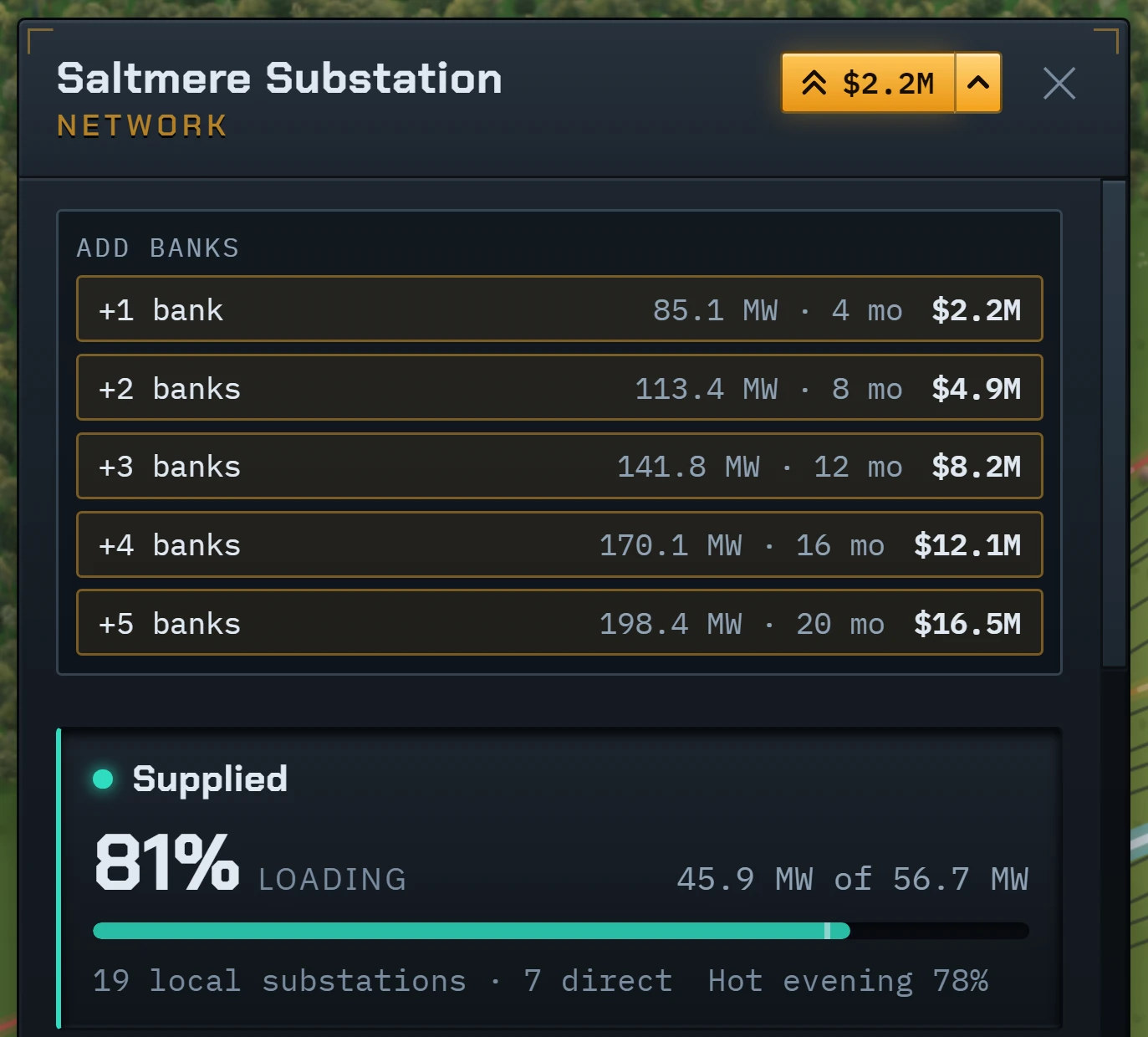
The Town Substation, the 110/20 kV Substation and the Main Substation are one substation now: 25 MW bare, and six banks of 25 MW up to 175 MW before research. Every town is founded with one, and you build the same thing.
Set its size on the build bar before you place it, or add banks later from its card, several at once if you like. A town’s first substation can be demolished, rebuilt, overhauled and repaired like any other.
- While a town’s first substation is gone, the town takes its power through another 110/20 kV substation in it.
- Old saves: each old substation becomes the new one at the smallest size that carries at least what it did.
Settings on their own panel
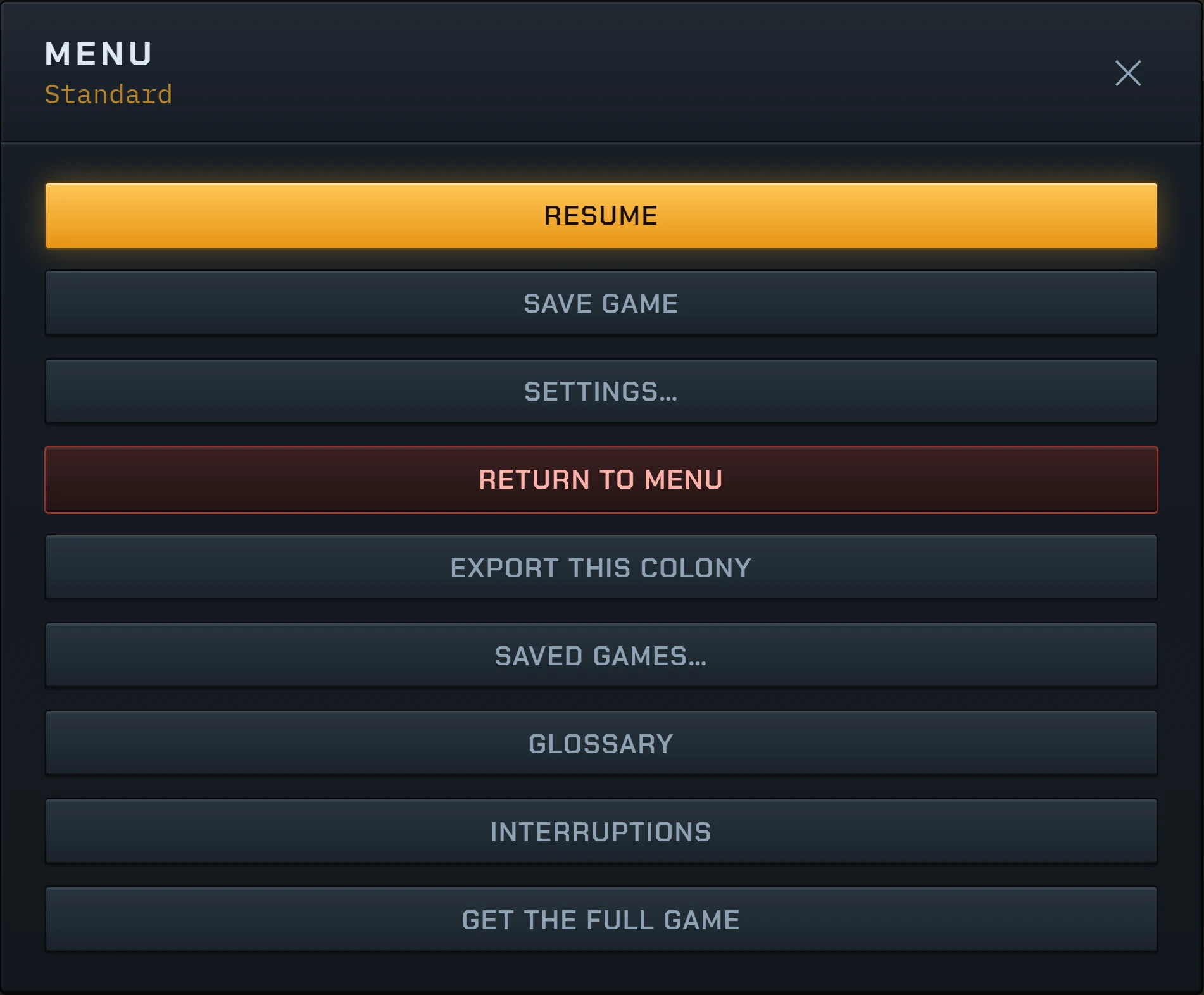
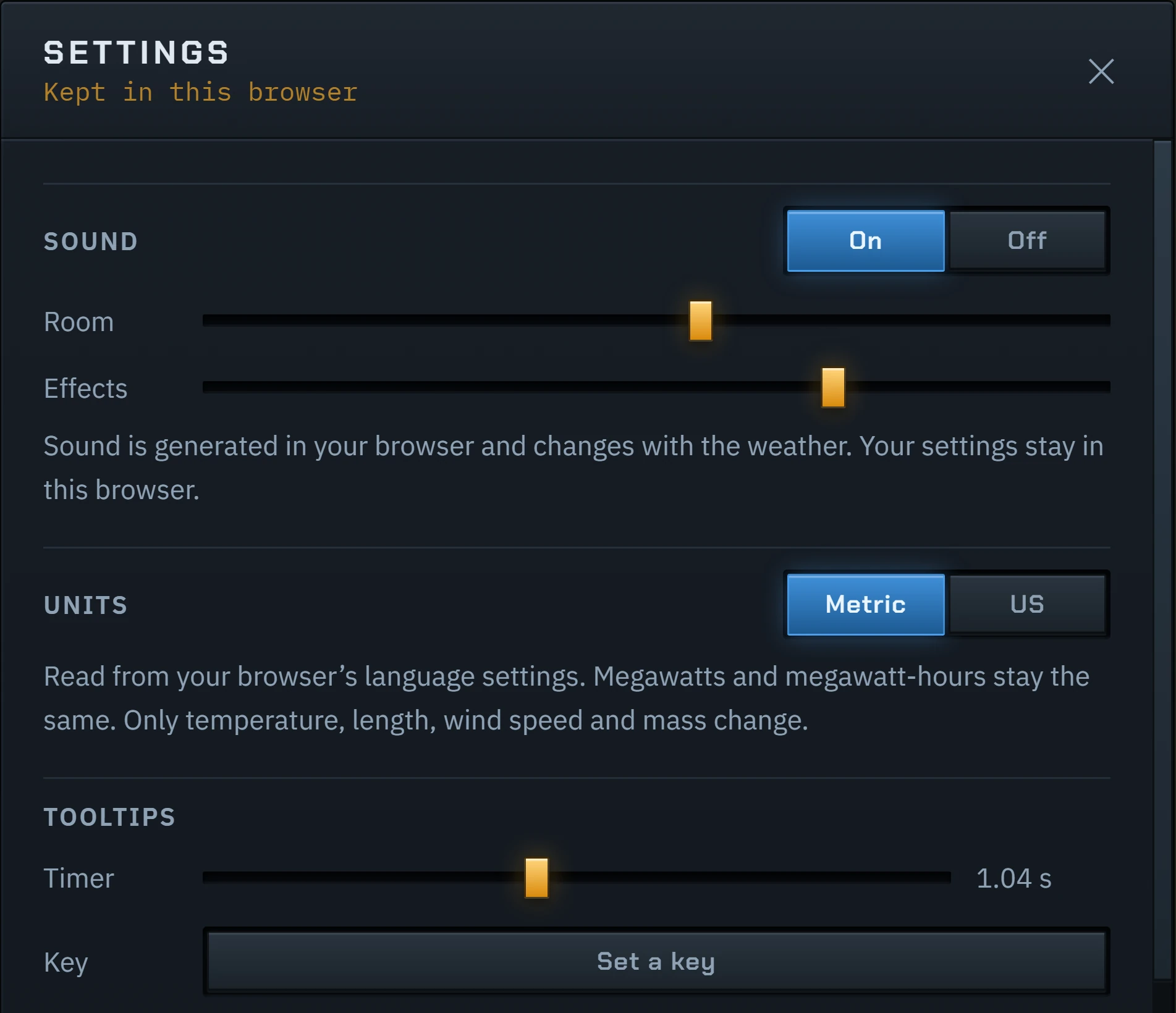
The menu in a run reads Resume, Save game, Settings and Return to menu, then the rest. Sound, units, tooltips, frame rate, renderer and interface size moved to a Settings panel of their own.
- Import is in Saved games. How to play is the help button or H.
Everything in 0.9.7
Every change in this update, as it is listed on the changelog.
- The Challenge now plays on the new growth rules. All scores stay on its leaderboard.
- The Challenge leaderboard shows the game version each score was set on.
- The Challenge leaderboard names the patch it plays on.
- Merge tool next to Split, key M. Click two lines that meet end to end to join them into one.
- Upgrade a line or substation straight to a later step. The arrow on the upgrade button lists every step with its price.
- The planning screen has a Groups tab to book overhauls or reinforce a whole group at once. Needs Asset Management.
- Menu, Settings: sound, units, tooltips, frame rate, renderer and interface size in one panel.
- The speed button turns orange when the colony cannot keep up with the speed you chose.
- Hover the lit speed button to see the speed the game really reaches and what holds it back.
- The Founder edition unlocks Carbon Valley, Shock Decade and Long Winter from the start.
- Your Challenge name is tied to your game key, so you can change it from any computer with that key.
- Remove my name, on the Challenge name panel, deletes your name and all its runs from the leaderboard.
- New Challenge names show only their first two letters until you tick Show my full name on the leaderboard.
- A new town arrives as an outline on the map, with a site marked for its substation and nothing built.
- Build a 110/20 kV Substation on the site, marked + 110/20 kV, to take the town on. Nothing is fined before that.
- A town you take on gives you 12 months to connect its streets to Local Substations before it fines you.
- New development, Load Sharing: at the end of each year, Local Substations over 90% hand streets to neighbours with room.
- The planning screen shows how many blocks Load Sharing moved and how many Local Substations it relieved.
- Each home’s appliances use about 0.5% more power a year, down from 2%.
- Heating and cooling no longer grow by themselves.
- A new town is founded every 3 to 6 years, instead of every 4 to 8.
- Towns lay out new streets twice as often.
- A town block fills up at about the density of Manhattan and grows no denser.
- The load on a Local Substation’s streets grows about 4% a year, down from 6%.
- Every world’s par is lower, to match the slower growth.
- Colonies started before 0.9.7 keep the old growth and the old scores.
- Colonies started before 0.9.7, the Challenge and the Academy still found new towns with a substation and Local Substations.
- In the Challenge, new towns land on the same ground for every player.
- The Town Substation, 110/20 kV Substation and Main Substation are now one 110/20 kV Substation, 25 to 175 MW.
- A town’s first substation can be demolished, rebuilt, overhauled and repaired like any other.
- While a town’s first substation is gone, the town takes its power through another 110/20 kV substation in it.
- New colonies have no Industrial Works. Each town’s industry draws its power through its industrial areas.
- New towns start with more 20/0.4 kV Local Substations, each loaded to about half its rating.
- A hot field holds a fixed amount of heat. Every geothermal plant on it shares it, so a second plant slows the first.
- A geothermal plant makes at most 90% of its rating, down from 100%.
- Geothermal plants no longer need to stand four tiles apart.
- The Geothermal layer greys each hot field by how much of its heat is in use.
- Placing a geothermal plant on a used field warns how far every plant on it would drop.
- A geothermal plant’s card shows its hot field and how much of its heat is in use.
- The simulation does the same work in about 30% less time on a large colony, with exactly the same results.
- After a zoom or a jump to another town, the map comes in sharp in one to three seconds instead of up to ten.
- The game’s pictures download a third lighter: a new colony fetches 6.5 MB of art instead of 9.9 MB.
- The map takes less time to draw on a large colony.
- A colony that falls behind at 400x gets more time to catch up.
- Town blocks are made of separate buildings in varied layouts, instead of one repeated picture.
- Industrial areas are estates of sheds, works, car parks and yards.
- Towns have parks, ponds, playgrounds, sports grounds, churches, schools, markets and allotments.
- Suburban streets are lined with trees.
- Towns end on a smooth edge with gardens, instead of a staircase of tiles.
- Rivers show which way they flow, and rivers and lakes have soft banks with shallows and reeds.
- Hydro dams are painted: white water below the gates, a gatehouse on every pier and weathered concrete.
- A dam’s banks carry rock, reeds and shrubs.
- The game menu reads Resume, Save game, Settings, Return to menu, then the rest.
- About left the menu. Import is in Saved games, and How to play is the help button or H.
- Every locked scenario says that the Founder edition unlocks it.
- The solar tower card shows Stored heat: the power its hot salt will make.
- The thanks page shows your code only in the first hour after buying. After that it is in your email.
- A solar tower forecast the colony’s cloud instead of its own sky, and turned its mirrors away on sunny mornings.
- A gas turbine filled a small shortfall while a solar tower or dam with free energy stood idle.
- The year’s expected peak was far too low for a colony moving its heating to heat pumps.
- A full wind substation warned it was close to tripping. It now warns only when the plants below it exceed its rating.
- The line tooltip showed the rating without research and damage, so it disagreed with the line’s card.
- A unit’s figure under its map lamp blinked on and off. A machine making nothing now reads 0 MW.
- Houses and units on a tip of shore stood on painted water. Built ground now meets the water square.
- A hydro dam’s powerhouse could stand in the river. It now stands on the bank.
- Some dams faced up their river, with the white water on the side the river comes from.
- Solar parks showed a sun glare that looked like a cable under the panels.
- Ungroup and Delete on group and district cards were cut off. They now read Ungroup? and Delete?
- A sandbox warned that development was idle.
- The wind turbines in the gameplay tour turned far too fast.
Play 0.9.7 now
No account and nothing to install. Your run is saved in your browser.