Generation
Some power plants burn fuel. Others run on wind, sunlight, a river or heat from the ground.
The prices below are list prices. In the game a price falls as you build more of the same kind, and the ground you build on adds to it. Which plants run, and when, is explained in how the power grid simulation works.
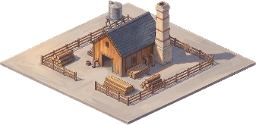
Wood-Fired Steam Plant
A basic biomass plant you can build with local materials. It uses more fuel per MWh than later plants. All wood plants share a limited regional supply of forest and farm residues.
- Capacity
- 18 MW
- Fuel
- Biomass
- Efficiency
- 22%
- List price
- $26 million
- Build time
- 8 months
- Lifetime
- 30 years
- Unlocked by
- Available from the start
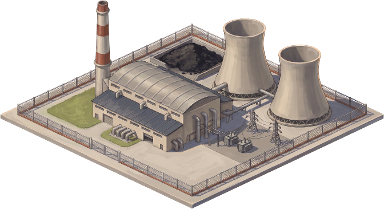
Coal Power Station
A coal plant with low operating costs, high emissions and slow output changes. Requires water for cooling.
- Capacity
- 60 MW
- Fuel
- Coal
- Efficiency
- 31%
- List price
- $74 million
- Build time
- 1.7 years
- Lifetime
- 40 years
- Unlocked by
- Steam Plant Works
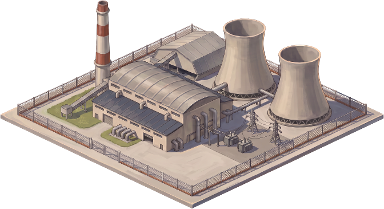
Supercritical Coal Plant
Higher steam temperatures reduce fuel use and CO₂ emissions by about a third per MWh. Rising carbon charges increase its operating cost.
- Capacity
- 120 MW
- Fuel
- Coal
- Efficiency
- 45%
- List price
- $124 million
- Build time
- 2.8 years
- Lifetime
- 45 years
- Unlocked by
- High-Pressure Boiler Works
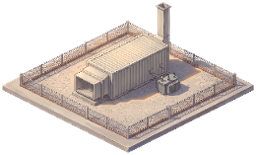
Open-Cycle Gas Turbine
A gas turbine that reaches full output in minutes. It uses more fuel per MWh than a combined-cycle plant, but can cover sudden shortages.
- Capacity
- 55 MW
- Fuel
- Natural Gas
- Efficiency
- 36%
- List price
- $34 million
- Build time
- 8 months
- Lifetime
- 30 years
- Unlocked by
- Turbomachinery Works
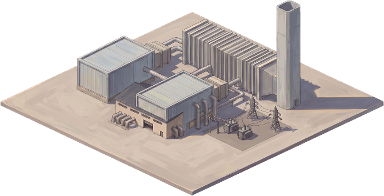
Combined-Cycle Gas Plant
Gas turbine exhaust raises steam for a second turbine. The most efficient thermal machine you can build, and flexible enough to follow the residual load.
- Capacity
- 100 MW
- Fuel
- Natural Gas
- Efficiency
- 59%
- List price
- $75 million
- Build time
- 2 years
- Lifetime
- 35 years
- Unlocked by
- Combined-Cycle Integration
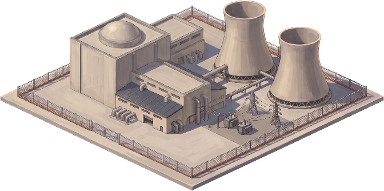
Small Modular Reactor
A nuclear reactor with a five-year build time, high construction cost and low fuel costs. Provides carbon-free power for sixty years. Its minimum output is half its rating, so plan storage or flexible generation around it.
- Capacity
- 60 MW
- Fuel
- Uranium
- Efficiency
- 34%
- List price
- $300 million
- Build time
- 5 years
- Lifetime
- 60 years
- Unlocked by
- Nuclear Programme
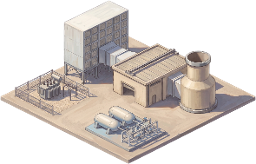
Hydrogen Turbine
Generates electricity from hydrogen without carbon emissions. Uses stored hydrogen first, then buys any shortfall unless operating policy forbids it. Hydrogen is expensive, so compare its fuel cost with gas and carbon charges.
- Capacity
- 80 MW
- Fuel
- Hydrogen
- Efficiency
- 40%
- List price
- $62 million
- Build time
- 1 year
- Lifetime
- 30 years
- Unlocked by
- Hydrogen Turbines
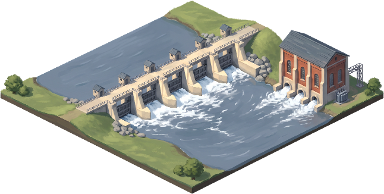
Hydroelectric Dam
A dam across a river. The reservoir behind it holds about a week of full output, so the plant can run at full power through the evening peak and keep its water when power is cheap. It fills through spring and summer and is drawn down over autumn and winter. The river decides how much it makes in a year. Suitable sites are limited; the plant lasts eighty years.
- Capacity
- 25 MW
- Reservoir
- 7 days at full output
- Runs on
- River water
- List price
- $72 million
- Build time
- 2.5 years
- Lifetime
- 80 years
- Unlocked by
- Hydropower Works
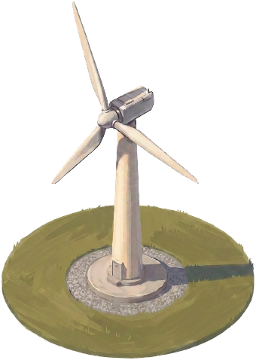
Wind Turbine
One 6 MW machine on one tile. Build a farm by planting several. The tool stays armed, so you can pick the best ground turbine by turbine. Output scales with the cube of wind speed, so check the wind overlay before you site anything.
- Capacity
- 6 MW
- Runs on
- Wind
- List price
- $9.4 million
- Build time
- 6 months
- Lifetime
- 25 years
- Unlocked by
- Wind-Turbine Manufacturing
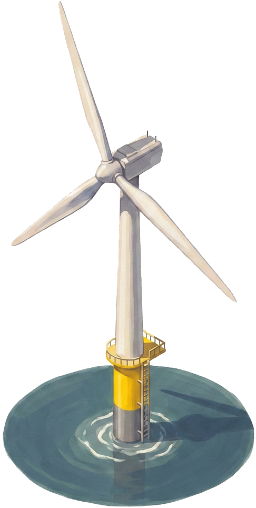
Offshore Wind Turbine
A single 15 MW machine standing in open water. Steadier, stronger wind than any land site can offer, at three times the capital cost per megawatt, and every one needs an export cable back to shore.
- Capacity
- 15 MW
- Runs on
- Wind
- List price
- $51 million
- Build time
- 1.5 years
- Lifetime
- 27 years
- Unlocked by
- Offshore Construction
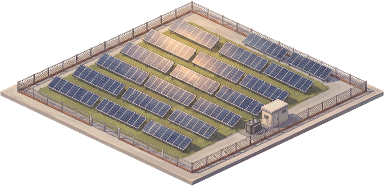
Solar Park
Cheap, fast to build, and no use at all at 7pm in January. Pairs with storage.
- Capacity
- 45 MW
- Runs on
- Sunlight
- List price
- $42 million
- Build time
- 6 months
- Lifetime
- 30 years
- Unlocked by
- Photovoltaic Manufacturing
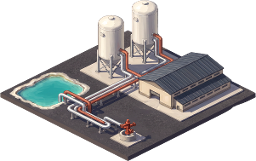
Geothermal Plant
Provides steady, carbon-free power regardless of weather. Site quality limits output, and nearby plants compete for the same geothermal resource.
- Capacity
- 52 MW
- Runs on
- Heat from the ground
- List price
- $190 million
- Build time
- 2.2 years
- Lifetime
- 40 years
- Unlocked by
- Geothermal Development
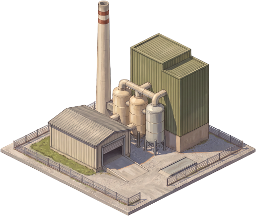
Waste-to-Energy Plant
The city pays you to take its rubbish, so the fuel price is negative. Regional waste supply is finite and shared by every waste plant: extra furnaces cannot burn refuse that does not exist.
- Capacity
- 22 MW
- Fuel
- Waste
- Efficiency
- 28%
- List price
- $140 million
- Build time
- 1.7 years
- Lifetime
- 35 years
- Unlocked by
- Municipal Waste Systems
Storage
Storage takes power when there is too much and gives it back when there is too little.
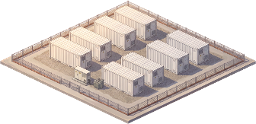
Grid Battery
Stores three hours of power and takes four months to build. Charges during surplus supply and discharges when needed. Capacity declines with age and use.
- Capacity
- 40 MW
- Storage
- 120 MWh
- Round trip
- 88%
- List price
- $44 million
- Build time
- 4 months
- Lifetime
- 15 years
- Unlocked by
- Battery Manufacturing
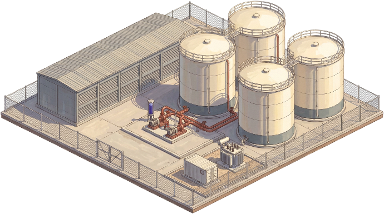
Long-Duration Battery
Stores ten hours of power in electrolyte tanks. Holds twice the energy of a lithium pack for 1.5 times the price and lasts 25 years instead of 15. Cycling costs about $2/MWh versus $18/MWh for lithium, but only 60% of charging energy returns as electricity. It charges during low-demand hours and surplus supply.
- Capacity
- 25 MW
- Storage
- 250 MWh
- Round trip
- 60%
- List price
- $68 million
- Build time
- 10 months
- Lifetime
- 25 years
- Unlocked by
- Long-Duration Batteries
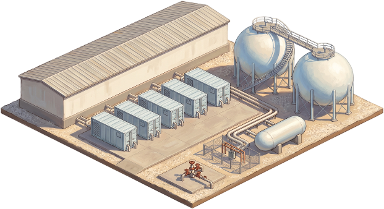
Electrolyser Plant
Turns surplus power into hydrogen. It only charges: a Hydrogen Turbine is what makes electricity again, and a tank farm or a cavern is what holds more than a day of it. Safety limits stop it running below 15% of its rating. Offered less than 9 MW it stays off and the surplus is curtailed instead. Operating policy sets when it may draw.
- Capacity
- 60 MW
- Storage
- 600 MWhth
- Power to hydrogen
- 72%
- List price
- $96 million
- Build time
- 1.2 years
- Lifetime
- 25 years
- Unlocked by
- Hydrogen Production & Storage
Hydrogen Tank Farm
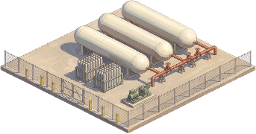
High-pressure tanks for hydrogen storage. Build anywhere in six months. A cavern holds thirteen times more for less money but takes two and a half years to build. Use a Hydrogen Turbine to generate electricity from the stored fuel.
- Storage
- 900 MWhth
- List price
- $78 million
- Build time
- 6 months
- Lifetime
- 30 years
- Unlocked by
- Hydrogen Production & Storage
Salt Cavern Store
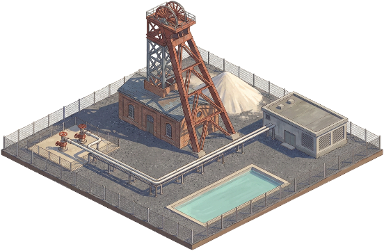
Stores hydrogen underground with very low leakage. Takes two and a half years to build. Use an Electrolyser Plant to produce hydrogen and a Hydrogen Turbine to turn it back into electricity.
- Storage
- 12,000 MWhth
- List price
- $130 million
- Build time
- 2.5 years
- Lifetime
- 50 years
- Unlocked by
- Hydrogen Production & Storage
Carbon capture and synthetic gas
Two machines that use power instead of making it.
Direct Air Capture Array
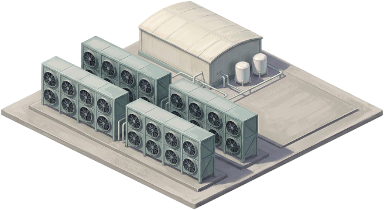
Fan walls pull air across amine sorbent; a regeneration hall strips the CO₂ and pumps it into basalt for good. Draws up to 30 MW and removes about fifteen tonnes an hour at full draw. Set it to run around the clock, in the cheap hours, or only on spare power. Captured carbon nets off the carbon bill, so under a real carbon price a clean grid can run its emissions negative.
- Load
- 30 MW
- List price
- $260 million
- Build time
- 1.7 years
- Lifetime
- 30 years
- Unlocked by
- Carbon Capture Works
Methanation Plant
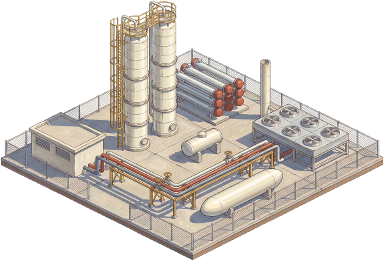
Makes methane your existing gas plants can burn without modification. Its carbon came out of the air, and hydrogen carries none, so burning it adds nothing. It is also the most expensive energy in the game: 1.25 MWh of hydrogen, which took nearly 2 MWh of electricity, makes 1 MWh of gas that a turbine turns back into 0.6. It is the only way a gas fleet reaches zero emissions.
- Load
- 6 MW
- List price
- $118 million
- Build time
- 2 years
- Lifetime
- 30 years
- Unlocked by
- Synthetic Methane
Network
Lines carry the power and substations step it between voltages: 380 kV over long distances, 110 kV across the colony, 20 kV into the towns and 400 V to the streets.
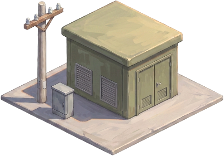
20/0.4 kV Local Substation
A packaged 20/0.4 kV kiosk on its own small plot among the streets, the same unit every quarter is founded with. Towns lay out new streets on their own, and those streets stay empty until a station reaches them. Put one at the edge, run 20 kV to it, and the waiting blocks develop. Streets can be reassigned between stations later.
- Steps
- 20 kV ↔ 400 V
- 400 V capacity
- 6 MW
- List price
- $1.9 million
- Build time
- 4 months
- Lifetime
- 40 years
- Unlocked by
- Available from the start
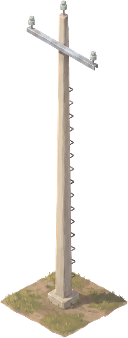
20 kV Feeder
Medium-voltage feeder cable. Runs from the substation out to district feed points. Overload one and the protection trips the whole feeder.
- Voltage
- 20 kV
- Rating
- 14 MW
- List price
- $260,000 per km
- Lifetime
- 40 years
- Unlocked by
- Available from the start
20 kV Double Feeder
Two circuits down one trench. Double the capacity of a plain feeder for less than double the cost, the usual answer when a district outgrows its connection.
- Voltage
- 20 kV
- Rating
- 28 MW
- List price
- $440,000 per km
- Lifetime
- 40 years
- Unlocked by
- Grid Construction
20 kV Quad Feeder
Four cables in one trench, as many as will share the ground before they start warming each other. Four times a plain feeder, and it draws load off the feeders around it as well as carrying more of its own.
- Voltage
- 20 kV
- Rating
- 56 MW
- List price
- $720,000 per km
- Lifetime
- 40 years
- Unlocked by
- Heavy Corridors
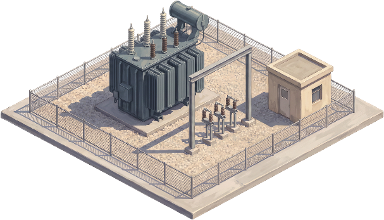
110/20 kV Substation
Converts 110 kV to 20 kV for local distribution. Adds capacity and supply points when a town outgrows its starting substation.
- Steps
- 110 kV ↔ 20 kV
- Throughput limit
- 40 MW
- List price
- $4.2 million
- Build time
- 10 months
- Lifetime
- 45 years
- Unlocked by
- Available from the start
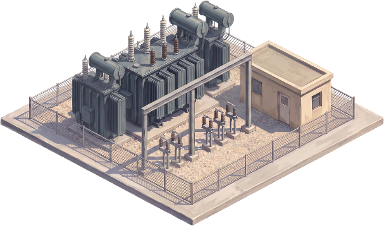
110/20 kV Main Substation
Provides 2.5 times the throughput of the standard substation to support larger towns and electric heating.
- Steps
- 110 kV ↔ 20 kV
- Throughput limit
- 100 MW
- List price
- $9 million
- Build time
- 1.2 years
- Lifetime
- 45 years
- Unlocked by
- Grid Construction
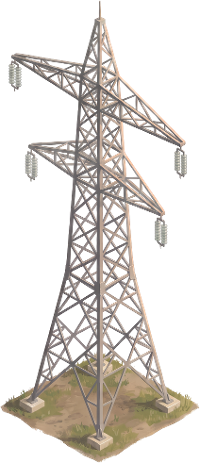
110 kV Line
Your starting transmission line. Costs less per kilometre than 380 kV, but loses about four times as much power over the same distance and has less capacity.
- Voltage
- 110 kV
- Rating
- 80 MW
- List price
- $420,000 per km
- Lifetime
- 50 years
- Unlocked by
- Available from the start
110 kV Double Circuit
Two circuits on the same towers double capacity and reduce losses for about two-thirds more cost. Damage to the route can still take out both circuits.
- Voltage
- 110 kV
- Rating
- 160 MW
- List price
- $700,000 per km
- Lifetime
- 50 years
- Unlocked by
- Grid Construction
110 kV Quad Circuit
Four circuits on one heavy tower line, the most a single right of way will take. Four times a plain circuit’s capacity, and a quarter of its reactance, so it also draws load off the routes beside it. Past this a corridor needs new ground or a higher voltage.
- Voltage
- 110 kV
- Rating
- 320 MW
- List price
- $1.15 million per km
- Lifetime
- 50 years
- Unlocked by
- Heavy Corridors
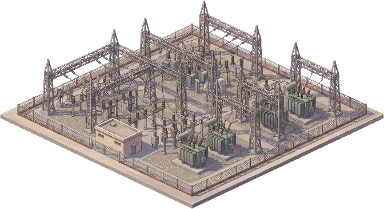
380/110 kV Substation
Connects 380 kV and 110 kV networks in both directions. The transformer has its own capacity limit. A 380 kV route loses about one ninth as much power as a 110 kV route carrying the same load.
- Steps
- 380 kV ↔ 110 kV
- Throughput limit
- 300 MW
- List price
- $26 million
- Build time
- 1.2 years
- Lifetime
- 50 years
- Unlocked by
- Extra-High-Voltage Equipment
380/110 kV Grid Node
Two transformer banks provide twice the throughput of a standard substation. One bank can keep the site supplied during an overhaul of the other.
- Steps
- 380 kV ↔ 110 kV
- Throughput limit
- 600 MW
- List price
- $40 million
- Build time
- 1.7 years
- Lifetime
- 50 years
- Unlocked by
- Extra-High-Voltage Equipment
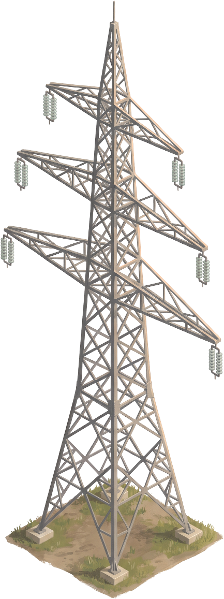
380 kV Overhead Line
A high-capacity transmission line with low losses per kilometre. Connects distant generation to towns.
- Voltage
- 380 kV
- Rating
- 1800 MW
- List price
- $1.15 million per km
- Lifetime
- 60 years
- Unlocked by
- Extra-High-Voltage Equipment